
Purpose. Such a profound and captivating concept.
Thinking back, how many of us truly understood our purpose from a young age?
Most of us didn’t, and some of us still don’t. And for today’s youth—growing up in a world filled with instant likes, viral fame, and rapidly changing trends—the question “What’s my purpose?” can feel pressurising and overwhelming.
In this age of instant gratification, we’re surrounded by stories of young people who seem to skyrocket to success overnight. Social media spreads the idea that success comes easily. We see young athletes becoming millionaires, teens starting businesses from their bedrooms, and activists gaining worldwide attention before they turn twenty. It can make purpose seem like something you either stumble into or miss entirely.
But purpose isn’t a lightning strike. It’s a journey that unfolds through reflection, curiosity, connection, and courage.
Why Purpose Matters
We often hear that it’s important to have a purpose in life. But why?
Because purpose gives direction, it acts like a compass during the confusing, exciting, and sometimes painful transition from adolescence to adulthood. According to Stanford professor William Damon, author of The Path to Purpose, young people with a sense of purpose are more resilient, motivated, and fulfilled. They’re not just chasing grades or popularity—they’re anchored by something deeper.
If adults can feel lost today, many young people feel it even more. In a world that values achievement and rarely allows time for reflection, it’s easy to confuse success with purpose.
Buddhism reminds us that real contentment doesn’t come from chasing external validation but from understanding the heart’s deeper aspirations. Our purpose doesn’t have to be grand or loud—it just needs to be authentic.
Passion vs Purpose: What’s the Difference?
“Follow your passion,” they say. Is passion the same as purpose?
Many people confuse the two. Passion is about what excites you; purpose is about what sustains you. Passion can burn bright and fade quickly, changing with our life’s seasons. However, purpose is the steady flame that endures.
From a Buddhist perspective, purpose is rooted in right intention and right livelihood, two aspects of the Noble Eightfold Path. Right intention means considering why we act: are we being kind, compassionate, and clear? Right livelihood means choosing work that does not harm others and brings benefit to individuals, society, and the world.
When young people align their interests with these values, they move from fleeting passion to lasting purpose.
Obstacles on the Path to Finding Purpose
So why is purpose so hard to find?
According to William Damon, one major reason is a “culture of short horizons.” We increasingly value speed over depth. Reality shows and social media celebrate fast fame and instant results. This obsession with shortcuts discourages people from taking the time to reflect, an essential part of finding purpose.
Then there’s the fear of failure. Many youths feel paralysed by the pressure to get it right the first time, whether choosing the perfect course, career path, or cause. There’s little room to explore or make mistakes when everything feels so high-stakes.
And there’s over-scheduling and over-indulgence. Today’s teens are so busy with school, tuition, extracurricular activities, and screen time that they hardly have time to reflect and grow. Without proper guidance and time for themselves, it’s very hard to hear that quiet voice inside that guides them toward their purpose.
How Parents Can Support Their Child’s Journey
As parents, we may feel compelled—or well-meaning enough—to try to choose our child’s purpose. But the truth is, we cannot. What we can do is create an environment where purpose can grow.
A young person’s first and most important source of purpose is usually their family. However, it’s not about parents giving answers easily. Instead, it’s about being there for their children, offering support and understanding. This means helping them grow, not trying to control what happens, but encouraging them and building trust.
This means practising the art of deep listening—not lecturing or advising, but asking open-hearted questions and giving space for answers to emerge. It means being open to what excites your child, even if their interest seems unfamiliar or unorthodox. And it means sharing your own story—how you’ve wrestled with your purpose, work, and values.
Buddhism teaches us to give our children both roots and wings. Roots provide stability and values. Wings give them the confidence to explore. Greta Thunberg, a well-known youth climate activist, didn’t start with big rallies or speeches at the UN. She began by sitting alone in front of the Swedish Parliament. Her parents didn’t push her into the spotlight; they were initially unsure. But they respected her determination and supported her, not by taking charge, but by trusting her voice and encouraging her to be well-prepared for the road ahead.
That’s the power of purpose—when personal belief is met with outer trust.
The Role of Community
While parents play a pivotal role in fanning the flame of purpose, having a community beyond the family helps keep that flame alive through shared experiences, encouragement, and belonging.
In Buddhism, the sangha—or spiritual community—is one of the Three Jewels of refuge. It reminds us that we don’t grow in isolation. We grow when seen, supported, and stretched by those walking the path alongside us.
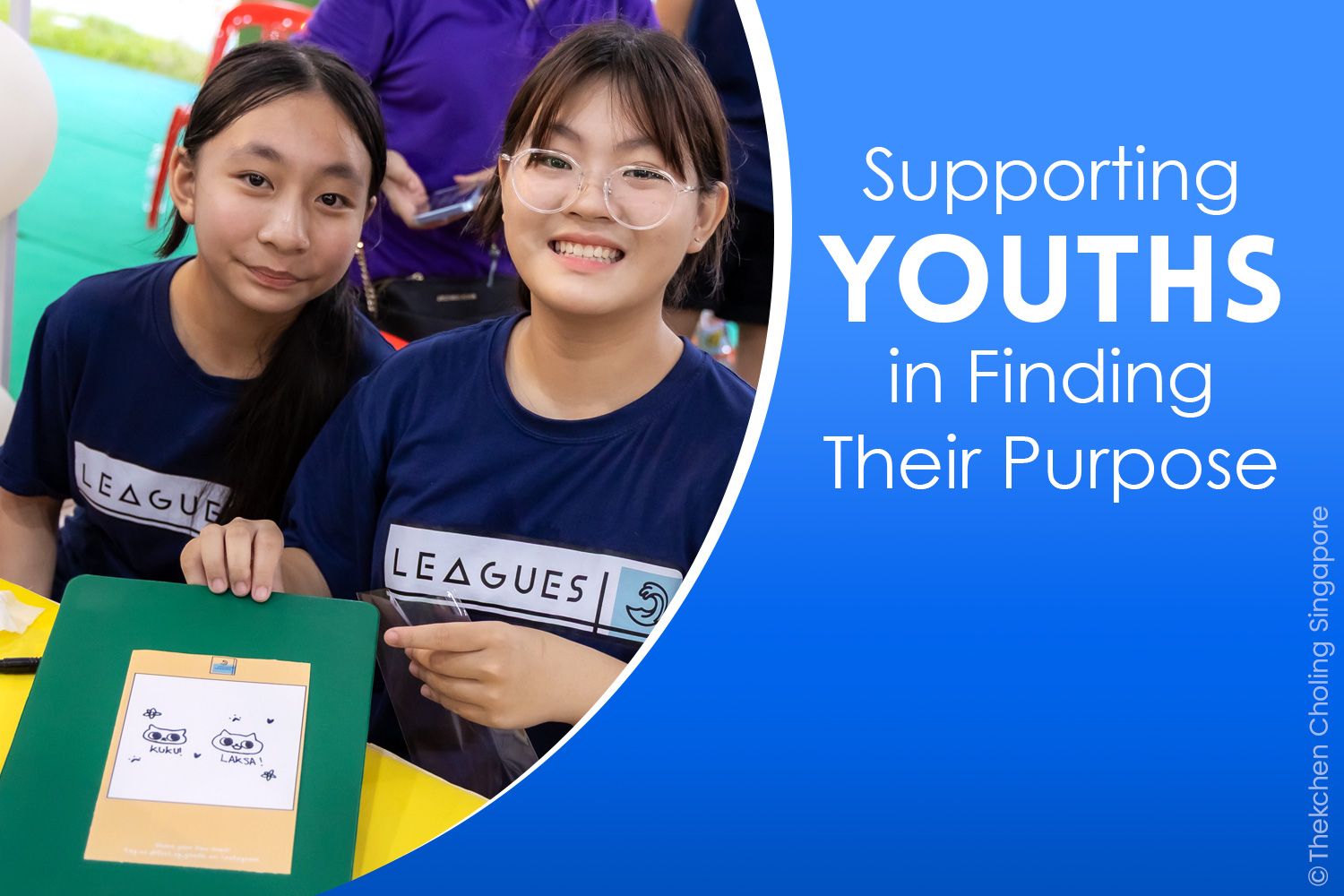
The Youth League at Thekchen Choling offers a supportive environment for young people. Through activities like hiking, volunteering, and friendship, they develop important life skills such as teamwork, communication, emotional strength, and self-awareness.
For example, a recent round of badminton sessions in May was more than just about playing games. The youths learned the importance of supporting each other, making plans, and sticking to them. They discovered how to lose gracefully and win humbly. These experiences highlight an important truth: we don’t need to know our purpose immediately. We just need to show up—with heart, determination, and openness.
When young people feel safe to share their thoughts, explore new ideas, and grow with support, they slowly begin to find their purpose.
Purpose is a Journey, Not a Destination
There’s no need to have everything figured out right away. Finding purpose is a process. It takes time, reflection, and real-life experience. It doesn’t have to be big or dramatic—it just needs to feel meaningful to you.
For youths, it’s okay to try things, change direction, and not have all the answers yet. Purpose often begins with small steps, exploring, learning, and connecting with others.
For parents, it’s about being present. Ask thoughtful questions, listen deeply, and trust that your child’s path will unfold in its own time.
At Thekchen Choling, our Youth Leagues is one way young people can explore interests, grow in confidence, and build meaningful friendships. Come for the badminton, stay for the laughter. Come with your questions, and meet others who are asking too. Purpose isn’t something we have to chase alone. Sometimes, it’s something we grow together.
Visit our temple at Jalan Besar and find out more about our Youth Leagues—to support our Youths in their growth, connection, and next step forward.
Sacred Mirror
The Sacred Mirror represents consciousness and the element of space. Clear, pure and bright, the mirror reflects all phenomena objectively without bias, thereby reminding us to practice objectivity and to rise above our judgmental minds. On a more subtle level, it reflects the Buddha’s core teaching of emptiness – that nothing exists on its own side without a dependent arising cause.
Pinnacle of the mirror
The pinnacle of the mirror, formed by the white crescent moon, flaming red sun and an orange flame of fire, represents the completion stage of Vajrayana practice.
Light Rays
The light rays radiating from the Sacred Mirror represent the flourishing of the Buddha’s teachings, fanning out to the furthest reaches of the universe.
Full Moon Disc
The moon disc represents Bodhicitta, the aspiration to become a Buddha to benefit all sentient beings.
Blue Lotus
Divinely fragrant, blue lotuses bloomed only in the Buddha’s time. By incorporating it into the temple’s logo, it is symbolic of the ever-present Buddha in Thekchen Choling. Moreover, a lotus flower represents purity, perfection, compassion and renunciation, similar to how the beautiful lotus remains untainted even though it had arisen out from the muddy waters.
Nine Precious Jewels
These nine precious jewels represent the Guru, Buddha, Dharma, Sangha, yidam or mind-seal deity, Dharma protector, the sky, earth, and the human realm.
Two Dragons
The two dragons represent continuity and harmony and create the cause for the temple to enjoy the strong support of members and benefactors for Dharma to flourish.
Golden Khata
The flowing golden khata represents the auspicious increase of all Dharma activities.
The Seven Gems of the Chakravartin or a Wheel-Turning King
1. The precious horse represented by a unicorn’s horn
2. The precious elephant represented by its tusks
3. The precious queen represented by round golden earrings
4. The precious minister represented by square golden earrings
5. The precious general represented by a pair of crossed swords
6. The precious jewel represented by the triple-eyed gem
7. The precious Dharma wheel represented by a branch of coral