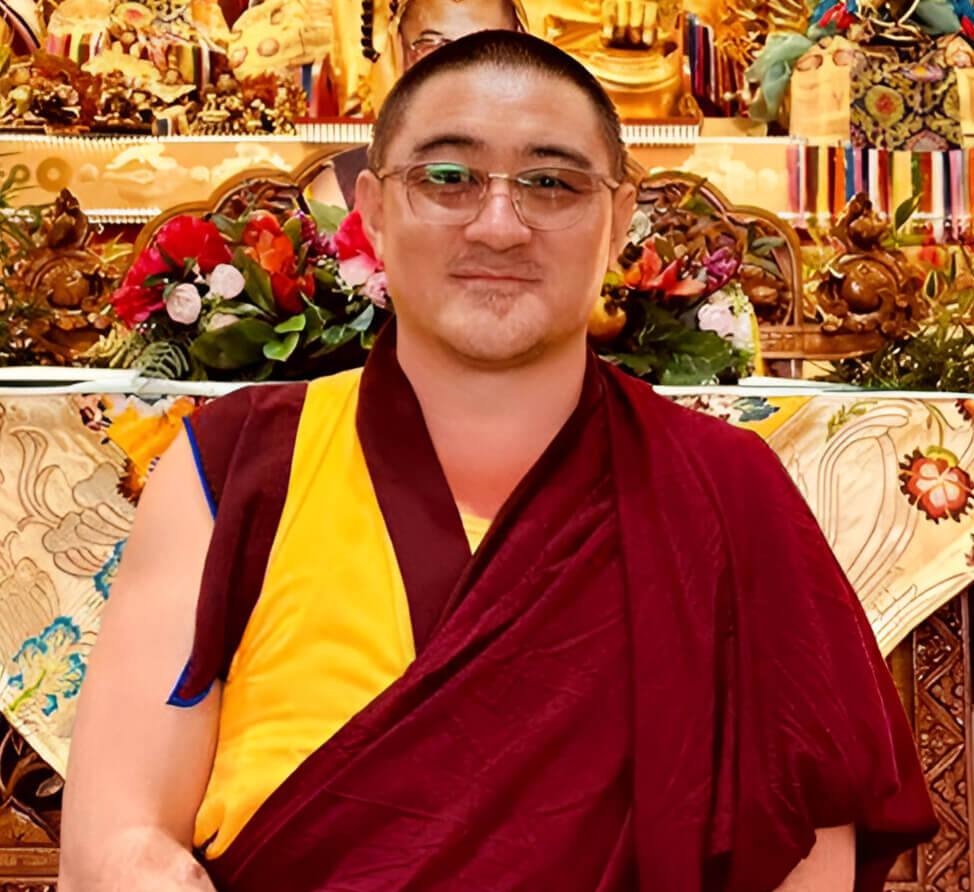
Geshela is a highly accomplished practitioner in the Tibetan Buddhist tradition. He holds the esteemed title of Ngarampa, which is equivalent to a master’s degree in tantric studies. His extensive training includes five years at Sera Monastic University and an additional twenty years at Gyume Tantric College.
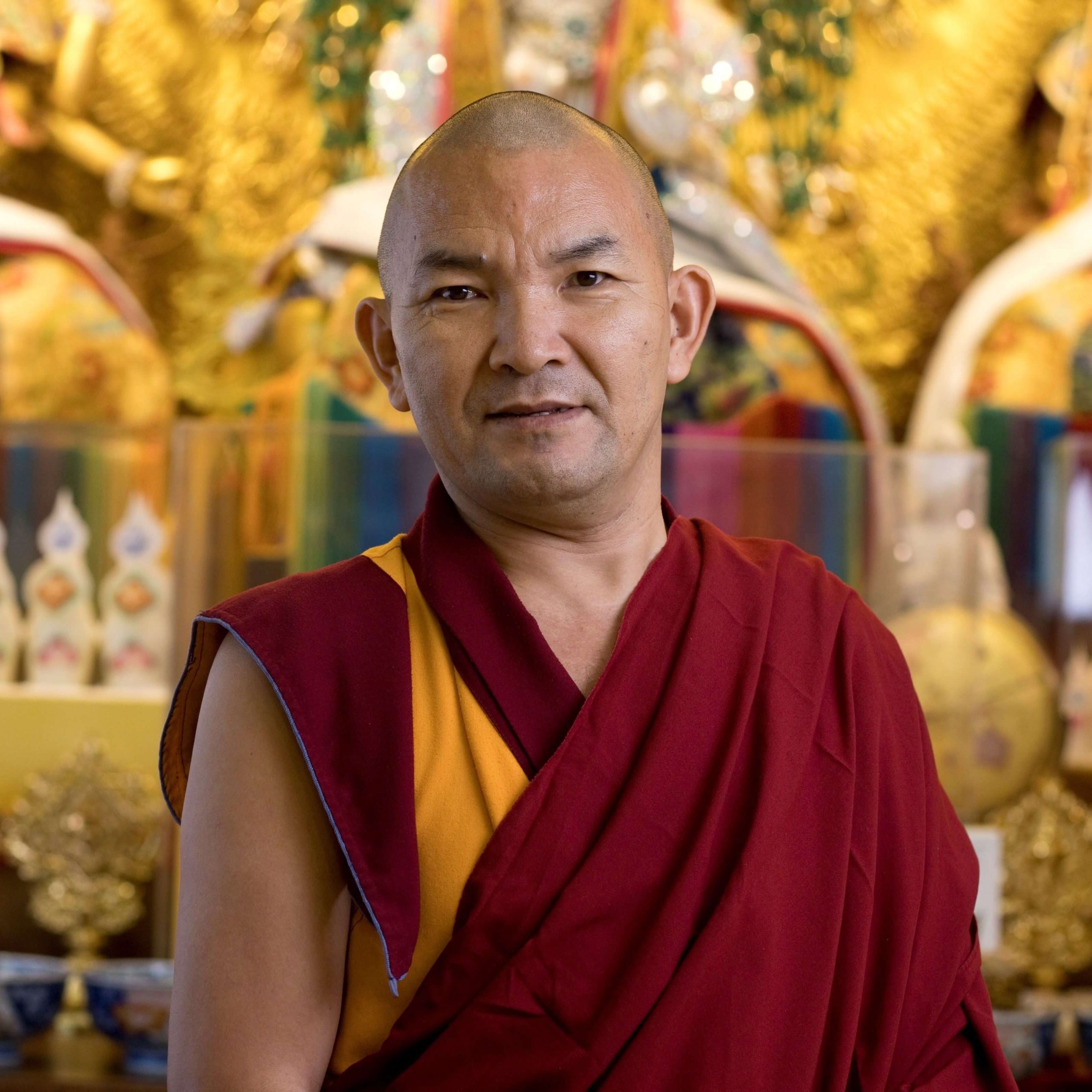
Born in 1968 in the region of Tsum, Nepal; Lama Tenzin Phuntsok was always fascinated by temple monks in robes and he liked the idea of being a monk even as a young boy.
At 13, he requested a Kagyu Rinpoche to bring him to Kathmandu, and after arriving, he was brought to Boudha Stupa where he helped clean the area, the mani wheels and used butter lamps. The Rinpoche then brought him to Kopan Monastery in 1984. At the same time, he was ordained and given vows under a Rinpoche from India.
Lama Phuntsok then met the late Khensur Rinpoche Lama Lhundrup and immediately spent the next 16 years studying the Buddhadharma (1984-1999). In 1990, he spent another three years studying under a Kopan Tantric master.
In 1995, he visited Hong Kong and Italy to help create sand mandalas. He was also invited to Germany to perform the Lama Dance under the tutelage of the late Geshe Lama Konchog.
From 1999 to 2016, he served as a resident Sangha in Taiwan in 3 of Taiwan’s FPMT centres (Jinxiu Farlin, Shakyamuni Center, Heruka Center), helping the resident Rinpoche by teaching the Tibetan Language, mudras, etc. He also completed three retreats during his stay in Taiwan.
In March 2016, Lama-la visited Thekchen Choling (Malaysia) Kota Tinggi Meditation Centre to help fill the giant Thousand-Armed Chenrezig rupa and since then, Lama Tenzin Phuntsok had been with us in Thekchen Choling (Singapore).
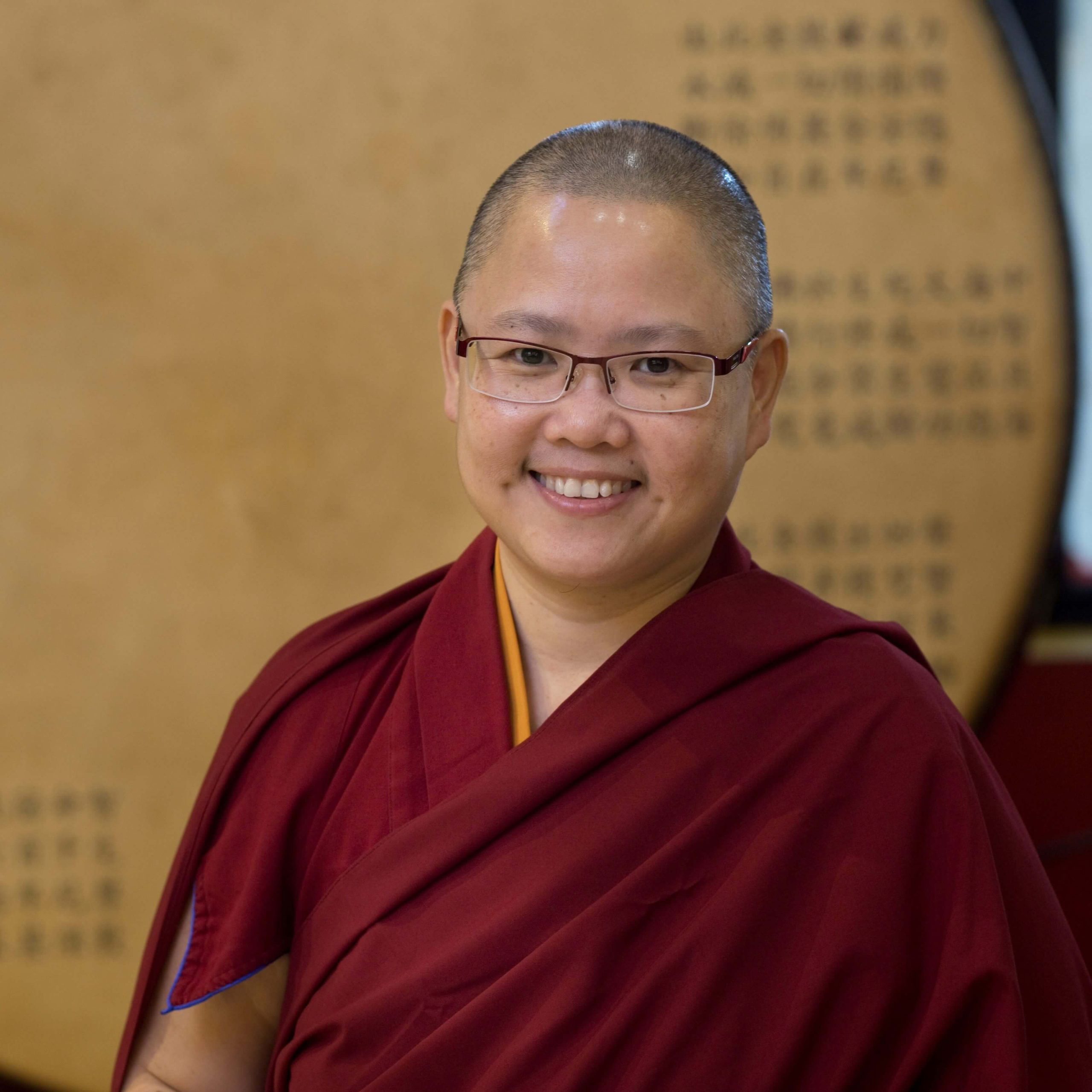
Ani Chodron, ordained in 2004 , was one of Rinpoche’s first disciples, having met him in 1994.
“By 2004, I had known Rinpoche for a decade already. I experienced his kindness and I always wanted to be of service to him. Because I was working shifts, I could not actively help Rinpoche and the temple. It was then that Rinpoche told me that if I really wanted to be of service to the Buddhadharma, I should consider becoming a nun. My parents had passed away before I met Rinpoche.
There was nothing to hold me back from making the decision to become an ordained Sangha, and so I decided to do just that. I am really grateful to Rinpoche and to Thekchen Choling. Without them, I would never be able to practise Dharma in this capacity.”
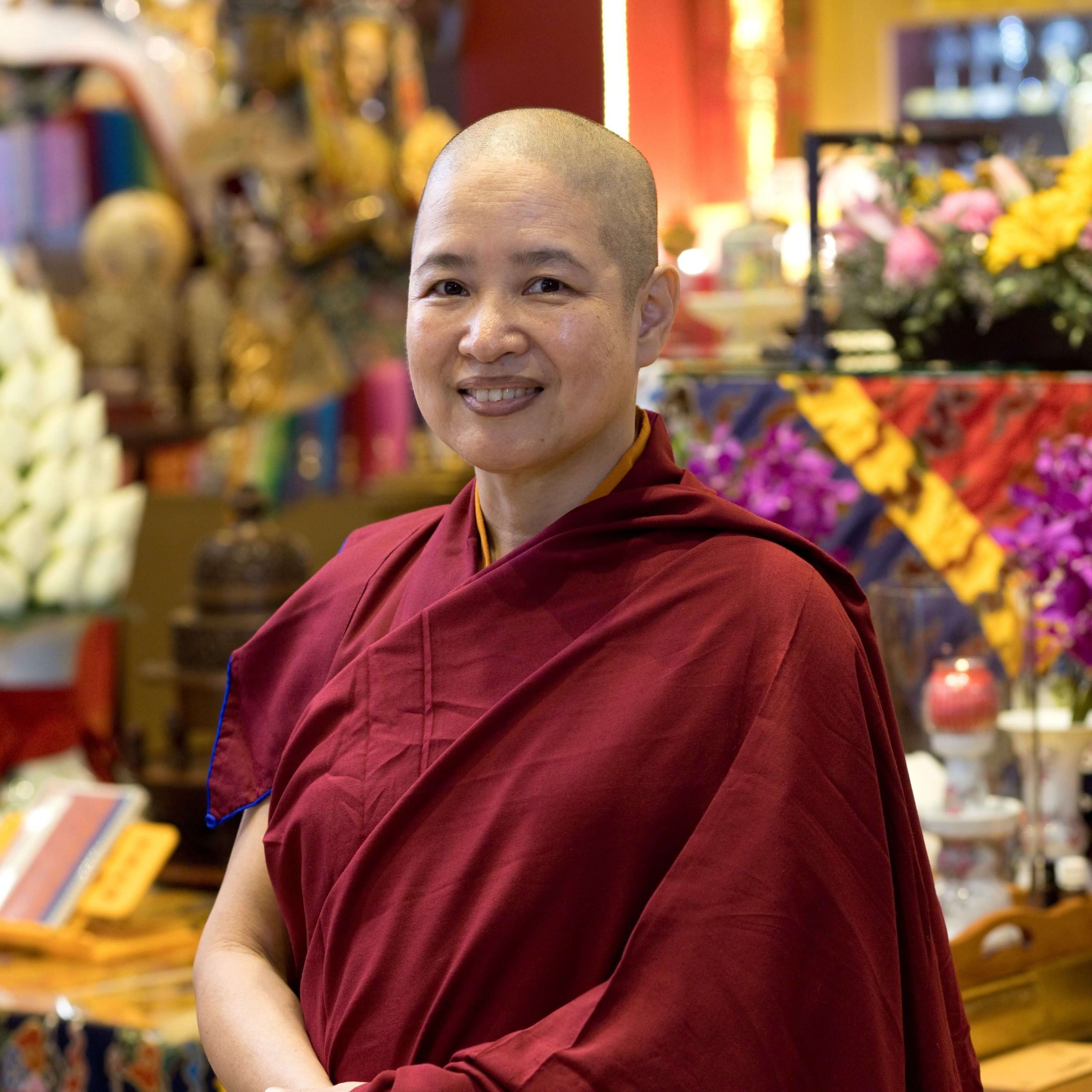
Ani Dechen was ordained in 2006.
“Since I was young, I’ve always been interested in religion and spiritual matters. After I came to Thekchen Choling, the urge became more pronounced. Sometime in 2006, I reflected on my life and felt that professional pursuits and worldly endeavours did not make my life more meaningful. When I consulted Rinpoche about my situation, he suggested I consider the monastic path that since I was dissatisfied with the householder’s life. I thought hard about this and finally with my parents’ permission, I decided to become a nun. Since then, I’ve noticed a gradual transformation – I think and react differently from before.”
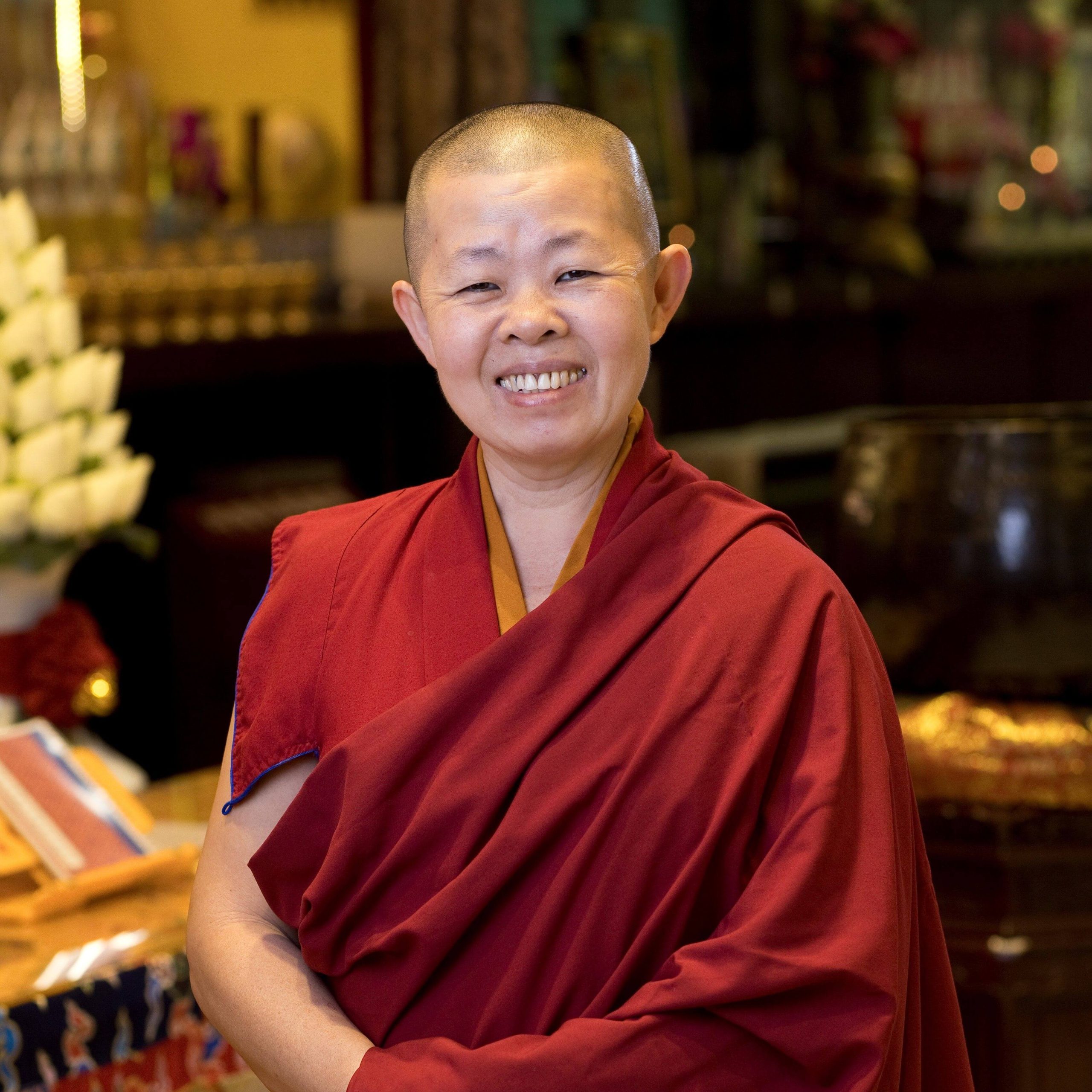
Ani Chokyi joined Thekchen Choling in 2006 and was immediately attracted to the place, its Rinpoche and the disciples. What was particularly special to her was that Rinpoche was giving regular Dharma teachings in Mandarin. Back then, she was not as well-versed in English as in Chinese. Thus, the teachings were a blessing for her.
“Rinpoche’s teachings really opened my heart. It is hard to find a Rinpoche who can teach in Chinese and in a way that is so clear and direct.” Ani Chokyi was ordained in 2007.
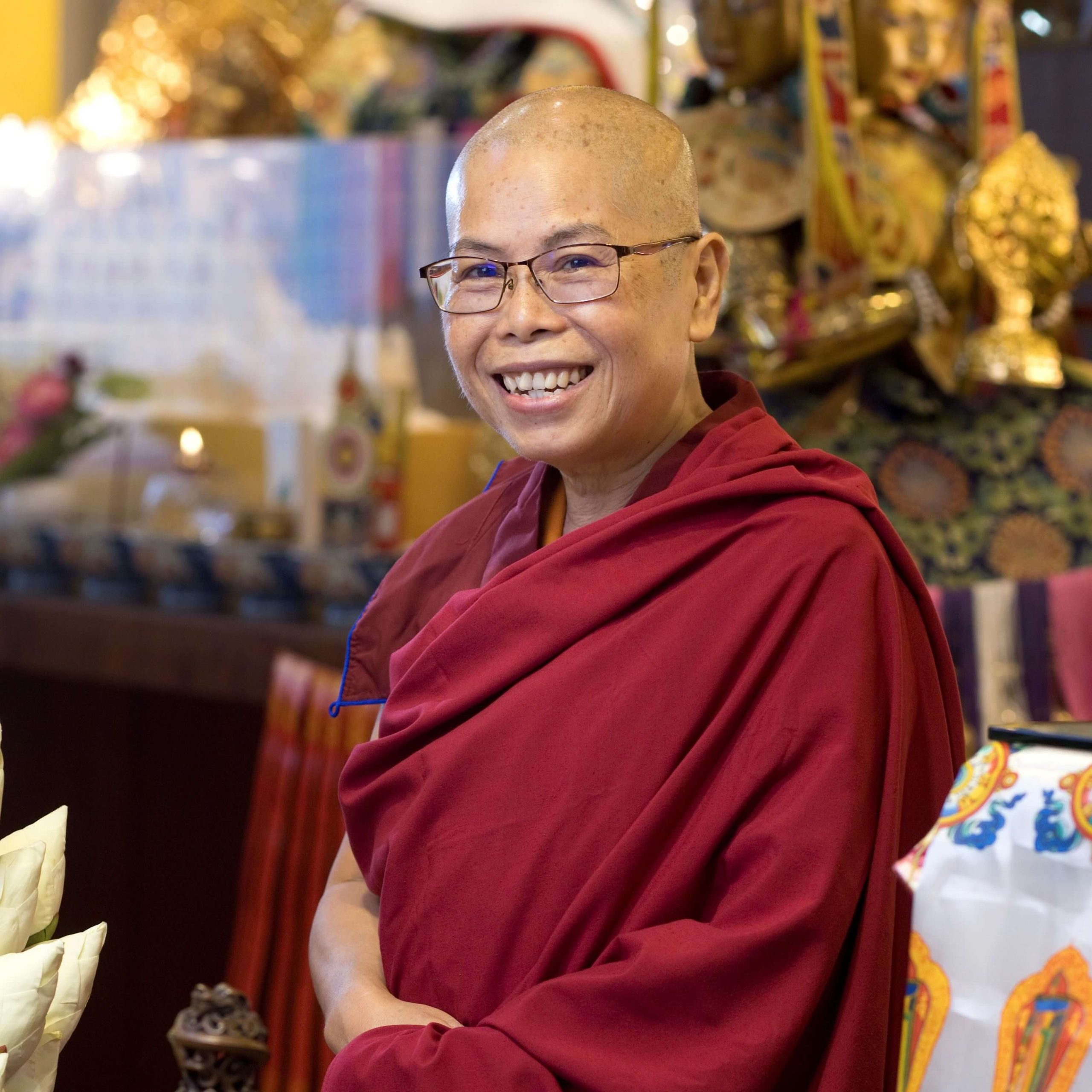
As a child, Ani Kunsang was exposed to both Buddhism and Taoism, but unfortunately, her parents were unable to answer her questions regarding Buddhism. In 2004, she discovered Thekchen Choling and Singha Rinpoche’s teachings, and that was the moment where many of her questions were finally answered.
Finding the right teacher who teaches Dharma in English then was really rare. In the earlier years, Ani Kunsang was advised on two occasions to take ordination vows by both Singha Rinpoche and the late Khensur Rinpoche Lama Lhundrup Rigsel. She was unable to do so as she had to tend to her aged parents. After the passing of her parents, Ani Kunsang made the decision, and took her ordination vows on 21 February 2017.
International Presence
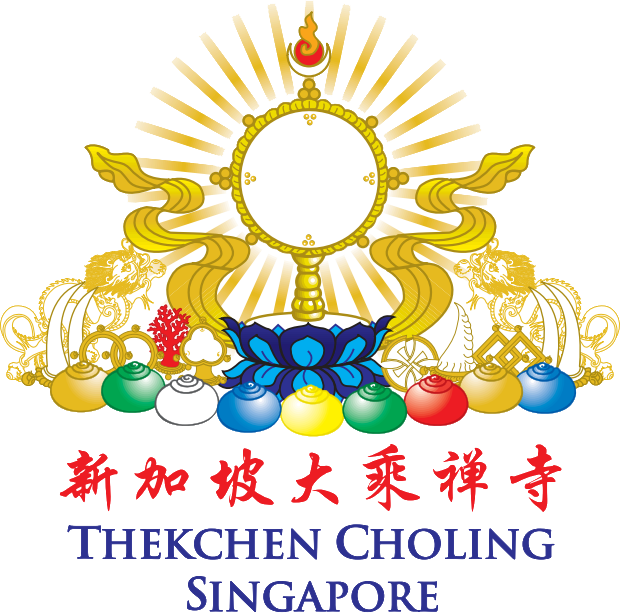
Sacred Mirror
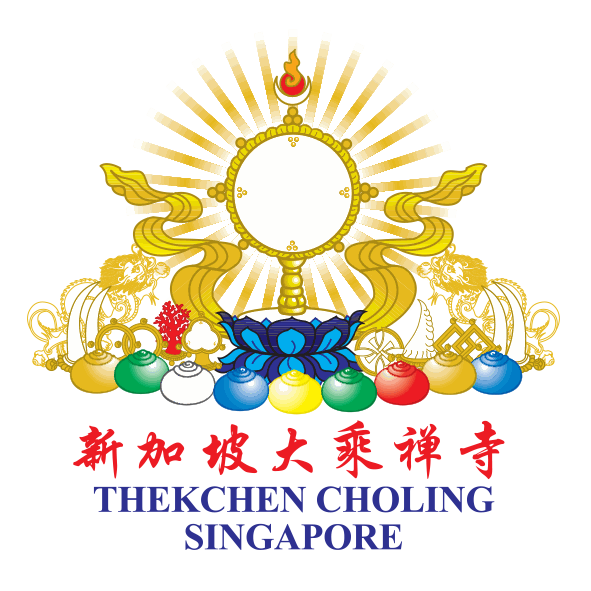
The Sacred Mirror represents consciousness and the element of space. Clear, pure and bright, the mirror reflects all phenomena objectively without bias, thereby reminding us to practice objectivity and to rise above our judgmental minds. On a more subtle level, it reflects the Buddha’s core teaching of emptiness – that nothing exists on its own side without a dependent arising cause.
Pinnacle of the mirror
The pinnacle of the mirror, formed by the white crescent moon, flaming red sun and an orange flame of fire, represents the completion stage of Vajrayana practice.
Light Rays
The light rays radiating from the Sacred Mirror represent the flourishing of the Buddha’s teachings, fanning out to the furthest reaches of the universe.
Full Moon Disc
The moon disc represents Bodhicitta, the aspiration to become a Buddha to benefit all sentient beings.
Blue Lotus
Divinely fragrant, blue lotuses bloomed only in the Buddha’s time. By incorporating it into the temple’s logo, it is symbolic of the ever-present Buddha in Thekchen Choling. Moreover, a lotus flower represents purity, perfection, compassion and renunciation, similar to how the beautiful lotus remains untainted even though it had arisen out from the muddy waters.
Nine Precious Jewels
These nine precious jewels represent the Guru, Buddha, Dharma, Sangha, yidam or mind-seal deity, Dharma protector, the sky, earth, and the human realm.
Two Dragons
The two dragons represent continuity and harmony and create the cause for the temple to enjoy the strong support of members and benefactors for Dharma to flourish.
Golden Khata
The flowing golden khata represents the auspicious increase of all Dharma activities.
The Seven Gems of the Chakravartin or a Wheel-Turning King
1. The precious horse represented by a unicorn’s horn
2. The precious elephant represented by its tusks
3. The precious queen represented by round golden earrings
4. The precious minister represented by square golden earrings
5. The precious general represented by a pair of crossed swords
6. The precious jewel represented by the triple-eyed gem
7. The precious Dharma wheel represented by a branch of coral