These days those who aren’t born into Dharma environment seem to arrive at the Dharma from many different directions. Some are forced to enter dharma after an overwhelming experience shatters their world. Others arrive more gently, perhaps through disillusionment with the shallowness of contemporary culture. Encountering the dharma, they find meaning and purpose. Others come because they are wounded, whether by love or hatred or just by the bitter of loneliness. In dharma they discover an alleviation of suffering. Then there are those who come looking for answers—answers they couldn’t get from science or philosophy.
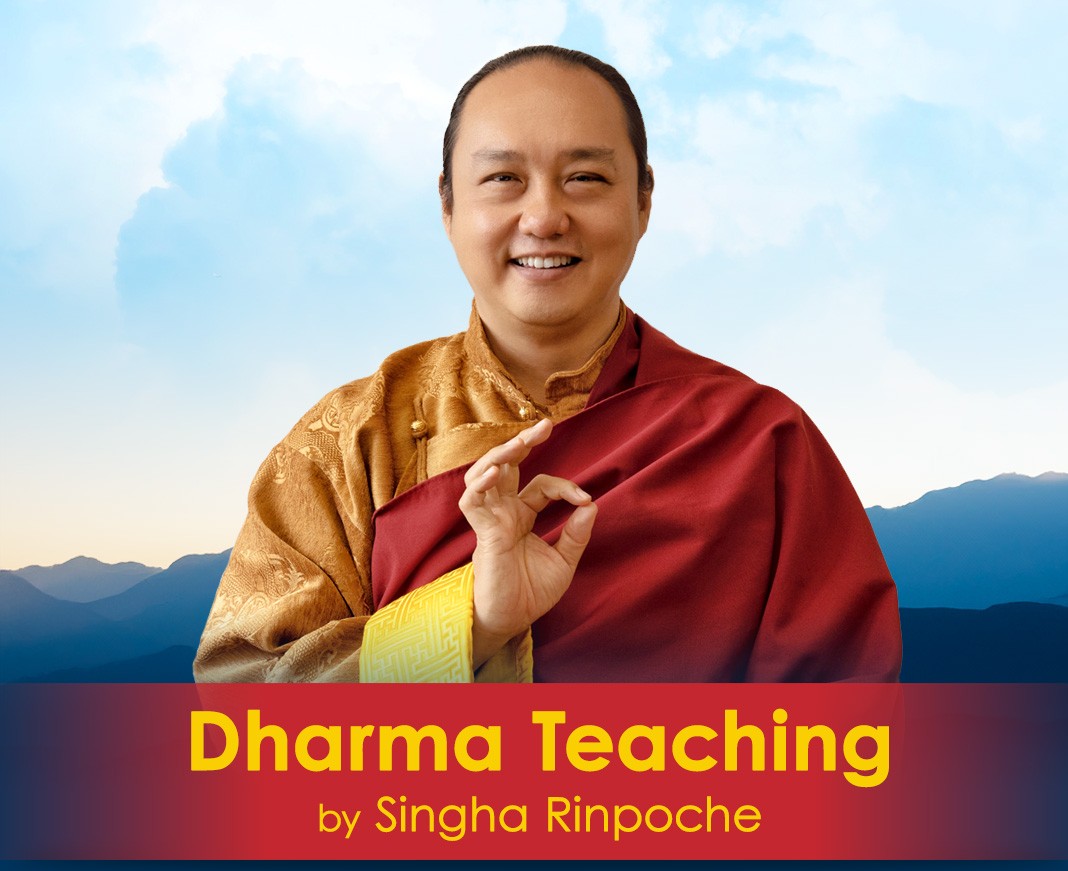
For them all, Singha Rinpoche’s teaching speaks compellingly of a shift in view/approach, unveiling of truth and a practice deeply embed in one’s daily life experience.
on the key points of learning the Dharma
View our archived Dharma Teachings via our YouTube channel
Singha Rinpoche
Dharma Courses
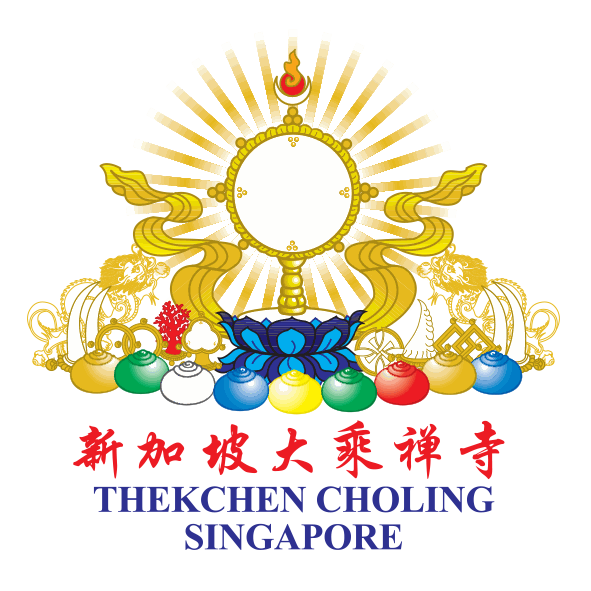
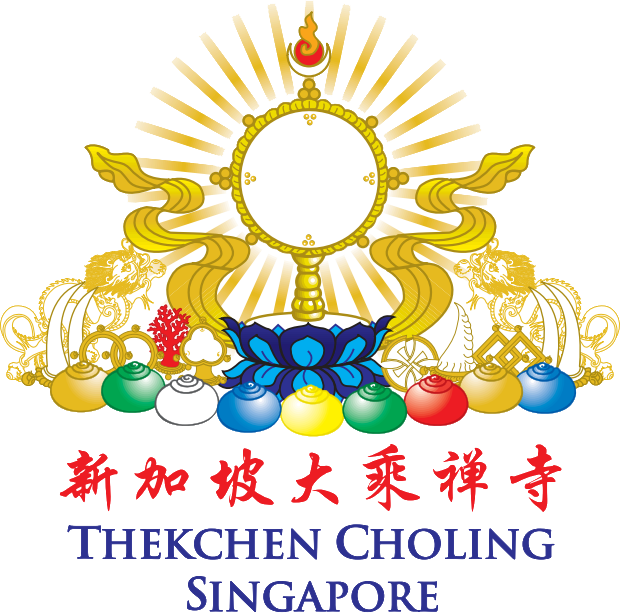
Sacred Mirror
The Sacred Mirror represents consciousness and the element of space. Clear, pure and bright, the mirror reflects all phenomena objectively without bias, thereby reminding us to practice objectivity and to rise above our judgmental minds. On a more subtle level, it reflects the Buddha’s core teaching of emptiness – that nothing exists on its own side without a dependent arising cause.
Pinnacle of the mirror
The pinnacle of the mirror, formed by the white crescent moon, flaming red sun and an orange flame of fire, represents the completion stage of Vajrayana practice.
Light Rays
The light rays radiating from the Sacred Mirror represent the flourishing of the Buddha’s teachings, fanning out to the furthest reaches of the universe.
Full Moon Disc
The moon disc represents Bodhicitta, the aspiration to become a Buddha to benefit all sentient beings.
Blue Lotus
Divinely fragrant, blue lotuses bloomed only in the Buddha’s time. By incorporating it into the temple’s logo, it is symbolic of the ever-present Buddha in Thekchen Choling. Moreover, a lotus flower represents purity, perfection, compassion and renunciation, similar to how the beautiful lotus remains untainted even though it had arisen out from the muddy waters.
Nine Precious Jewels
These nine precious jewels represent the Guru, Buddha, Dharma, Sangha, yidam or mind-seal deity, Dharma protector, the sky, earth, and the human realm.
Two Dragons
The two dragons represent continuity and harmony and create the cause for the temple to enjoy the strong support of members and benefactors for Dharma to flourish.
Golden Khata
The flowing golden khata represents the auspicious increase of all Dharma activities.
The Seven Gems of the Chakravartin or a Wheel-Turning King
1. The precious horse represented by a unicorn’s horn
2. The precious elephant represented by its tusks
3. The precious queen represented by round golden earrings
4. The precious minister represented by square golden earrings
5. The precious general represented by a pair of crossed swords
6. The precious jewel represented by the triple-eyed gem
7. The precious Dharma wheel represented by a branch of coral