
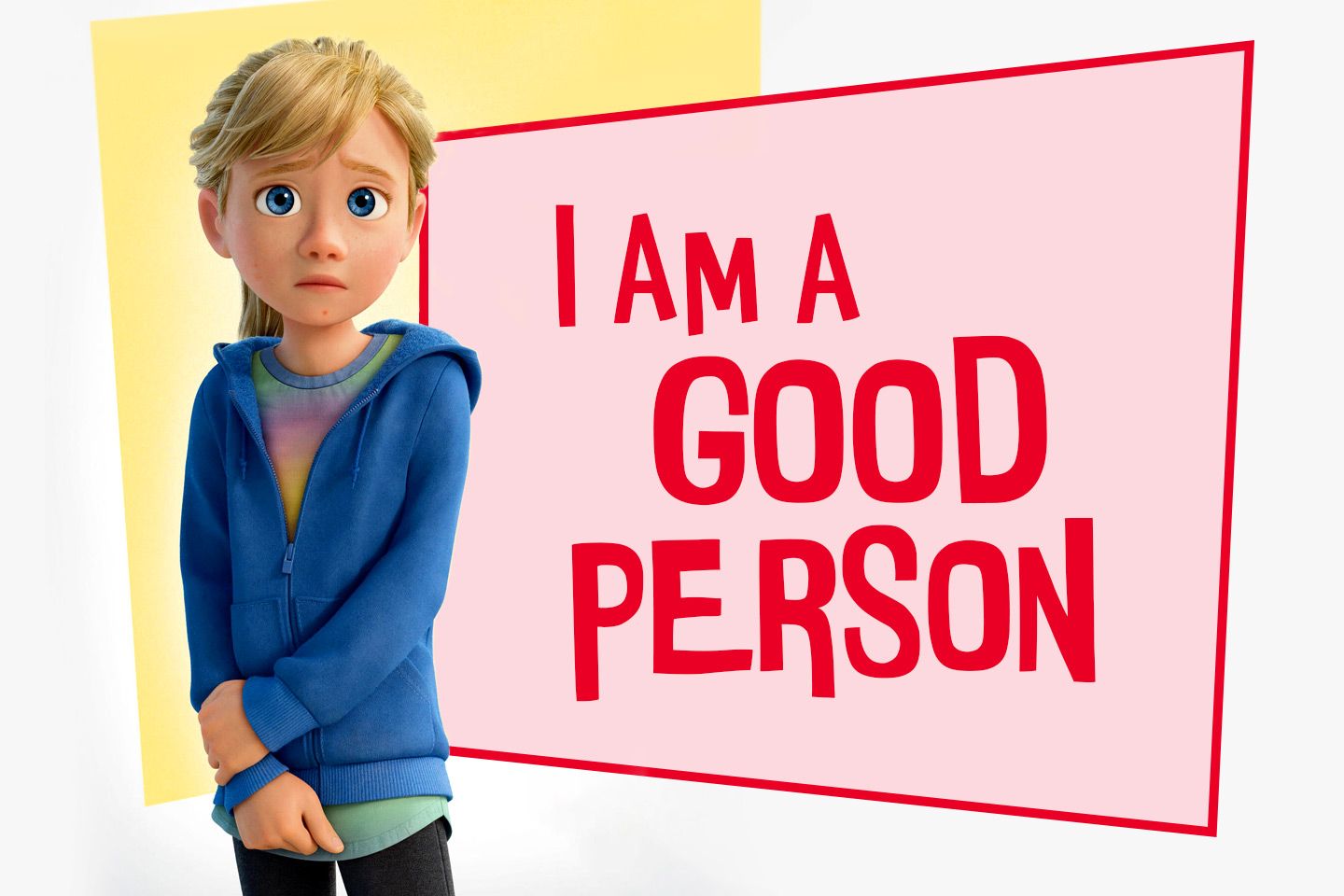
Inside Out 2 is a heartwarming and insightful movie about a girl going through puberty. She must face new emotions like anxiety, envy, embarrassment, and boredom. Similarly, all of us has most likely gone through a growing-up phase at some point in our lives, and it always brings a tsunami of emotions that are hard to deal with. When we reflect on the insightful lessons that Inside Out 2 has taught us, it is similar to how Buddha has taught the Dharma in helping us tame our monkey mind.
Starting from the very beginning of the show, Riley had to face the fact that her best friends will be going off to another high school. She found this hard to deal with, and cried secretly on her own once she got out of the car. What was once a hockey camp that she was looking forward to with her best friends became a camp that she started stressing herself over as she was worried about not having any friends in high school. This very pivotal moment for her shows us how our conditions in life are transient, that things can change at any time, as with our emotions. Nothing is truly permanent and forever, as our life changes at every moment in time.
Looking at how Riley is always managing her emotions – joy, sadness, anger, disgust, fear, anxiety, and so on, pinpoints the fact that all our emotions are always changing from moment to moment. Hence, just as Buddha taught, these emotions are not permanent, our lives are constantly on the change. This very important lesson on impermanence of all phenomena leads to the next lesson, which is that our emotions do not define our identity.
Whenever Riley gets a new core memory (that shiny ball they hold), it first begins with a strong emotion like joy. It then gets placed into the lake where it becomes a belief for Riley, forming her sense of self. Riley’s belief and sense of self at the beginning was only one – “I am a good person”. However, anxiety came into the picture and she started forming more beliefs about herself, one that led her to think that “I am not good enough”. This change in her core sense of self shows us how we are constantly changing, adapting to our environment, and becoming a different person than we were before. It is linked to impermanence.
At the end of the show, we can see all the emotions hugging Riley’s core sense of self, trying to calm her down from her anxiety attack. Then, the emotion Joy decided to make a lifechanging move, which is to remove her core belief that “I am a good person”. Slowly, we saw how Riley started forming new beliefs, changing at every single moment. She has good ones and bad ones, from “I am selfish” to “I am kind”, and that really shows us how we are constantly changing at every moment. Even though our beliefs form our identity, all these are inherently empty from their own side, just as Buddha has taught. Thus, the “I”, our self-grasping identity, is empty. There is no self that truly exists on its own side. This leads us to our last lesson which is that we all have Buddha nature within us that embraces both the ‘good’ and the ‘bad’ inside of us.
The beautiful part about Inside Out 2 is that it teaches us to embrace everything within ourselves – the good, the bad, the ugly, the sweet. When we accept and embrace every part of ourselves, that’s when we grow and blossom to be who we really are. It is like how Buddha accepts all beings for who they are, teaching us that there’s no true ‘good’ and ‘bad’ parts but this is all a part of our experiences that makes us who we are. It is how we can awaken ourselves to accept and embrace all beings too.
Through unconditional self-love, acceptance, and compassion, we extend this love to all beings just like how Buddha loves all sentient beings. This is awakening the Buddha nature within us, this compassion, that all of us have inside of our souls. This is especially prominent during Riley’s anxiety attack scene, where she was struggling to be a ‘good person’ and at the same time dealing with the belief that she is not ‘good enough’. This breakdown eventually pushes her to grow into someone who has so much love for all of her ‘bad’ sides as well, and not just someone who only focuses on her strengths. She began embracing her flaws fully. This is how Riley had the courage to step up and apologise to her best friends for her unfriendly behaviour over the hockey camp.
Inside Out 2 had many unforgettable moments that taught us to embrace ourselves, no matter how ‘bad’ we are. The Dharma lessons we can learn in how impermanence is a fact of life, and that our identity is inherently empty, is wisdom from Buddha that we can carry on throughout our lives. Just like how Riley overcame her anxiety attack by not grasping onto the self so tightly, shows us that a compassionate acceptance of every part of ourselves can help us have a more serene and loving mind for all beings. In this way, we are better able to enjoy life and face challenges with resilience once we can accept how everchanging our core identity is, and grow from our life experiences. This is the start of awakening our Buddha nature within us.
If you want to discover more about your Buddha nature and go deeper within yourself, do check out our weekly Dharma teachings by Singha Rinpoche, where he shares practical and experiential Dharma insights for everyone to benefit from. Click here to listen to one of the teachings on how to deal with emotions.


Sacred Mirror
The Sacred Mirror represents consciousness and the element of space. Clear, pure and bright, the mirror reflects all phenomena objectively without bias, thereby reminding us to practice objectivity and to rise above our judgmental minds. On a more subtle level, it reflects the Buddha’s core teaching of emptiness – that nothing exists on its own side without a dependent arising cause.
Pinnacle of the mirror
The pinnacle of the mirror, formed by the white crescent moon, flaming red sun and an orange flame of fire, represents the completion stage of Vajrayana practice.
Light Rays
The light rays radiating from the Sacred Mirror represent the flourishing of the Buddha’s teachings, fanning out to the furthest reaches of the universe.
Full Moon Disc
The moon disc represents Bodhicitta, the aspiration to become a Buddha to benefit all sentient beings.
Blue Lotus
Divinely fragrant, blue lotuses bloomed only in the Buddha’s time. By incorporating it into the temple’s logo, it is symbolic of the ever-present Buddha in Thekchen Choling. Moreover, a lotus flower represents purity, perfection, compassion and renunciation, similar to how the beautiful lotus remains untainted even though it had arisen out from the muddy waters.
Nine Precious Jewels
These nine precious jewels represent the Guru, Buddha, Dharma, Sangha, yidam or mind-seal deity, Dharma protector, the sky, earth, and the human realm.
Two Dragons
The two dragons represent continuity and harmony and create the cause for the temple to enjoy the strong support of members and benefactors for Dharma to flourish.
Golden Khata
The flowing golden khata represents the auspicious increase of all Dharma activities.
The Seven Gems of the Chakravartin or a Wheel-Turning King
1. The precious horse represented by a unicorn’s horn
2. The precious elephant represented by its tusks
3. The precious queen represented by round golden earrings
4. The precious minister represented by square golden earrings
5. The precious general represented by a pair of crossed swords
6. The precious jewel represented by the triple-eyed gem
7. The precious Dharma wheel represented by a branch of coral