
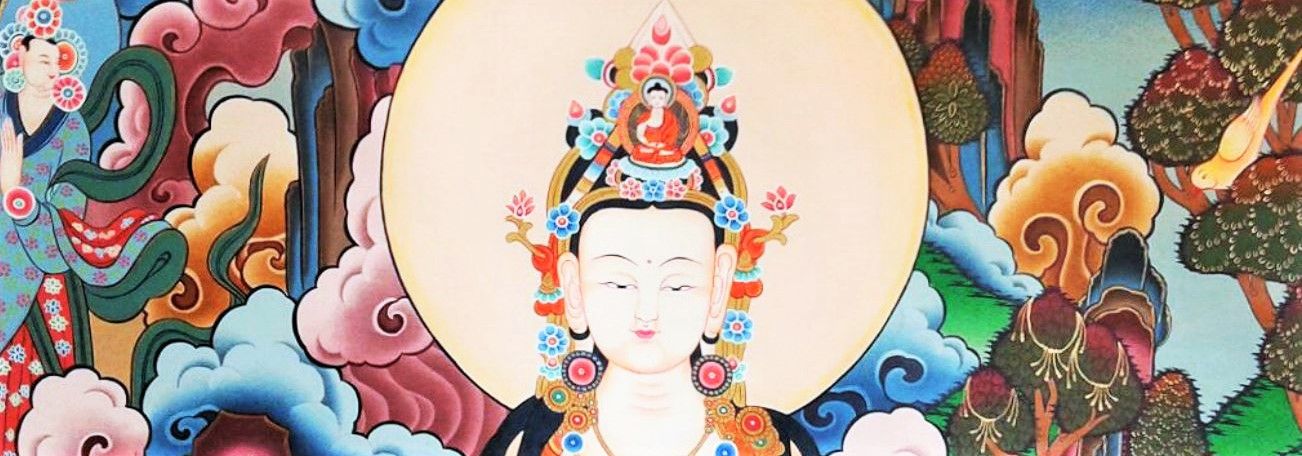
In communal prayers for the Lunar 7th Month, huge paper effigies of “The King of Ghosts” (鬼王 or 大士爷) are commonly seen at the ritual sites in towns or communities. In Buddhist Ullambana Festival, he is being represented on the altar by a scroll painting or statue. Who is he?
The “King of Ghosts” is known to Buddhists as “Lord of the Flaming Face” (面燃大士) or “King of Pretas” where preta means “hungry ghosts” in Sanskrit. Although the King of Pretas is fearsome in appearance, he is actually one of the manifestations of Guanyin Bodhisattva. In the Lotus Sutra, Buddha expounded that Guanyin will take whatever form necessary to bring salvation to beings, thus Guanyin manifested the “King of Pretas” to liberate beings born in the ghost realm.
The “Lord of the Flaming Face” or “King of Pretas ” first appeared in the ‘Dharani Sutra for Bringing Salvation to the Hungry Ghosts with Burning Mouths’《救拔饿鬼陀罗尼经》, translated into Chinese by Amoghavajra (705-774) in Tang dynasty. In this scripture, Ananda, one of Buddha’s principle disciples, was meditating in the woods, when the King of Pretas appeared before him with fire burning in his mouth. The King of Pretas was manifested by Guanyin Bodhisattva. He told Ananda that he would soon die and be reborn as a hungry ghost. Horrified, Ananda went to the Buddha to ask how he could avert this fate. Buddha told Ananda the importance of practicing generosity and taught him mantras and food charity practices to spirits that would ease the suffering of the hungry ghosts. These practices became essential components of the Ullambana rituals we see today. It stands to reason then, that during the lunar seventh month, Buddhist invoke the presence of the King of Pretas whenever there is a salvation ritual conducted for the hungry ghosts. Portrayals of the King of Pretas usually have a small image of a peaceful Guanyin on the crown to indicate his original form.
Despite his wrathful appearance, King of Pretas is compassionate at heart. Guanyin bodhisattva takes the form of the King of Pretas as this is the form that will enable him to subdue the stubborn and restless ghosts, who are most likely to take advice from a more powerful ghost. His form as a hungry ghost also reminds us to eliminate the causes of rebirth in the lower realms, by subduing the three poisons (greed, anger and ignorance) through diligence in our practice. The Chinese believe that praying to the King of Pretas at the ritual site would help to maintain proper order of the spirits that came for the feast and prayers. To common folks, it is especially important to pray to this form of Guanyin for protection from illnesses, bad luck and spirit harm.
以下介绍“面燃大士”的由来。
农历七月期间,你或许会发现各个中元会的场地都会供奉一尊巨大威猛的“鬼王”纸札像。在佛教的盂兰法会中,也会供奉他的画像或金身。这尊“鬼王”究竟是谁?人们为什么向“鬼王”祈福呢?
人们俗称的 “鬼王” 或 “大士爷” 在佛教里称为 “面燃大士” 或 “焦面大士”。“面燃大士” 虽然显的是饿鬼的形象,其实是慈悲观音菩萨的化身。在《普门品》中,佛陀讲到观音菩萨会根据不同众生的需要,化身为各种不同形象施与救度,而面燃大士就是观音菩萨为了度化饿鬼道众生而显的形象。 “面燃大士” 的典故,记载于《救拔饿鬼陀罗尼经》。
一日,释迦如来在迦毗罗卫国的僧伽蓝所为大众说法,同时,阿难尊者寂静的林中修禅定。阿难尊者修到了三更之后,观音菩萨化作了一位饿鬼的样子,来到阿难面前。“饿鬼” 面貌丑陋,头发散乱,腹大如山,咽喉如针缝一样细小,面部上不停地喷火,阿难尊者见到后大吃一惊,问它是什么样的因果导致它得此种身形。“饿鬼” 说,他的名字叫面燃,因为生前为人吝啬,贪婪并且不知足,所以死后堕入饿鬼道,遭受种种痛苦。“饿鬼” 又告诉阿难说,他将在三天之后死去,死后也会生在饿鬼道中。阿难听后大惊失色,急忙跑到释迦如来处哀求救脱的方法。佛陀于是为他说《焰口经》,教导他向饿鬼布施食物的方法。经中记载的施食法,如今也成为了佛教寺院中盂兰胜会的重要内容之一。
这也就是为什么,无论是佛教的盂兰胜会道场,或民间救济饿鬼的法事,一定会安奉“面燃大士”或 “大士爷” 像。“面燃大士” 的头顶上,一般会安奉一尊慈眉善目的观音菩萨,以表示“面燃大士”其身就是观音的化身。 “面燃大士” 显的虽然是忿怒相,其实是慈悲菩萨心肠。观音菩萨之所以会显现为饿鬼之王的形象,乃是为了方便度化顽固刚强的鬼道众生。
这些众生有许多强烈的习性,唯有以威猛大力的鬼王示现说法,才能使它们降服生信。观音菩萨显现饿鬼之身,也是为了警诫我们,一定要精进修法,灭除贪心、嗔心和愚痴,才能够免除投生于鬼道乃至三恶道之苦。 民间相信,在救度饿鬼的法会道场供奉 “面燃大士” 能让前来受食听经的鬼众遵守秩序,不争不抢,让全村合境平安。人们也会特地前去法会道场向“面燃大士”上供祈福,祈求大士爷庇佑一家老少消灾祛病、逢凶化吉,不受幽灵的伤害或骚扰
Sacred Mirror
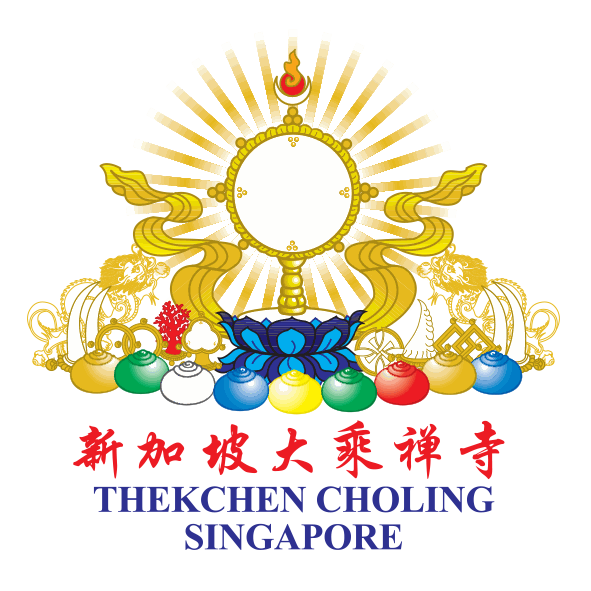
The Sacred Mirror represents consciousness and the element of space. Clear, pure and bright, the mirror reflects all phenomena objectively without bias, thereby reminding us to practice objectivity and to rise above our judgmental minds. On a more subtle level, it reflects the Buddha’s core teaching of emptiness – that nothing exists on its own side without a dependent arising cause.
Pinnacle of the mirror
The pinnacle of the mirror, formed by the white crescent moon, flaming red sun and an orange flame of fire, represents the completion stage of Vajrayana practice.
Light Rays
The light rays radiating from the Sacred Mirror represent the flourishing of the Buddha’s teachings, fanning out to the furthest reaches of the universe.
Full Moon Disc
The moon disc represents Bodhicitta, the aspiration to become a Buddha to benefit all sentient beings.
Blue Lotus
Divinely fragrant, blue lotuses bloomed only in the Buddha’s time. By incorporating it into the temple’s logo, it is symbolic of the ever-present Buddha in Thekchen Choling. Moreover, a lotus flower represents purity, perfection, compassion and renunciation, similar to how the beautiful lotus remains untainted even though it had arisen out from the muddy waters.
Nine Precious Jewels
These nine precious jewels represent the Guru, Buddha, Dharma, Sangha, yidam or mind-seal deity, Dharma protector, the sky, earth, and the human realm.
Two Dragons
The two dragons represent continuity and harmony and create the cause for the temple to enjoy the strong support of members and benefactors for Dharma to flourish.
Golden Khata
The flowing golden khata represents the auspicious increase of all Dharma activities.
The Seven Gems of the Chakravartin or a Wheel-Turning King
1. The precious horse represented by a unicorn’s horn
2. The precious elephant represented by its tusks
3. The precious queen represented by round golden earrings
4. The precious minister represented by square golden earrings
5. The precious general represented by a pair of crossed swords
6. The precious jewel represented by the triple-eyed gem
7. The precious Dharma wheel represented by a branch of coral