
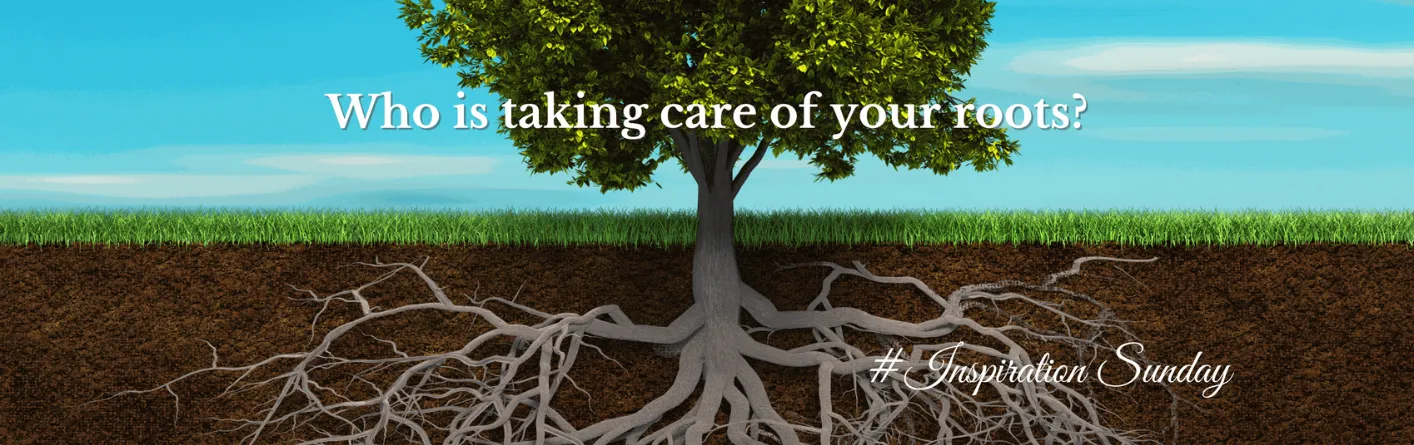
“As we search Buddhism for happiness, peace, love, and compassion… and begin to find some of it… we experience floating on a cloud. Is that sustainable?”
Many people practice Buddhism in search of happiness. But instead of happiness, they find more suffering and disappointment. The reason is simple. Before the happiness sustains, the cause, condition, and effect must ripen. And the first thing for this, is self-awareness.
It is through self-awareness that we are able to look deeper, to see what karmic seeds and karmic situations we have yet to learn. Some people always choose to be victimized. They choose to see that everyone else around them has something more or something better than they have. The karmic lesson here is to realize this and to make a conscious decision to do purification and be motivated to break away from this cycle. This is the first real lesson at the beginner level.
Many like Buddhism because of the talk about peace, love, and compassion. These are things that everybody wants. In reality however, to practice Mahayana Buddhism one needs to train like a Samurai, to become a great Bodhisattva warrior. One with the goal of leading all beings towards enlightenment – despite enormous self-sacrifice.
This is the intermediate level, when – in fact – one starts to cry a lot. To have heartaches, feelings of disappointment, anger, loss, and helplessness. One doesn’t know what to do. This is the time when one needs to open up the body, speech, and mind, and seek refuge in a Guru. This is the real beginning of Guru devotion.
Guru devotion means realizing that we are here to allow the root of dharma to grow deeper and to break through inwards. Our root Guru is the one who makes our root grow deep. Even if we feel comfortable growing in a small flower pot, the Guru sees how the small plant with great potential must be nurtured.
Many believe that the Guru is supposed to be the guiding light but that is not so. The Guru is one who points us in the right direction and passes on the light. It’s up to us to keep that light alive. We have to stop thinking that somebody else can be our guiding light.
The Guru gives us the light and tells us to walk in front of him. He does this to make sure that everyone is protected from behind and to keep everyone going along on the right path. We supplicate to the Guru because the lineage Gurus have all done something that is beyond the ordinary. They listened to their Gurus and they followed and practiced according to the advice they were given and therefore they became accomplished lineage Gurus themselves.
Supplicating to the Gurus is a golden opportunity to practice what is considered an essential heart practice. Without the heart, whatever we do will not mean a thing. This is why reciting supplication prayers is an unbelievably great blessing.
Dharma Teaching by Singha Rinpoche and edited by Sandeep Nath
18 April 2021
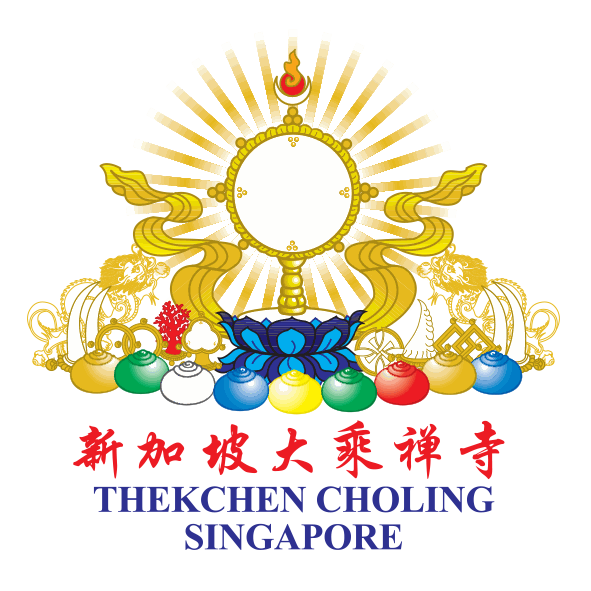
Sacred Mirror
The Sacred Mirror represents consciousness and the element of space. Clear, pure and bright, the mirror reflects all phenomena objectively without bias, thereby reminding us to practice objectivity and to rise above our judgmental minds. On a more subtle level, it reflects the Buddha’s core teaching of emptiness – that nothing exists on its own side without a dependent arising cause.
Pinnacle of the mirror
The pinnacle of the mirror, formed by the white crescent moon, flaming red sun and an orange flame of fire, represents the completion stage of Vajrayana practice.
Light Rays
The light rays radiating from the Sacred Mirror represent the flourishing of the Buddha’s teachings, fanning out to the furthest reaches of the universe.
Full Moon Disc
The moon disc represents Bodhicitta, the aspiration to become a Buddha to benefit all sentient beings.
Blue Lotus
Divinely fragrant, blue lotuses bloomed only in the Buddha’s time. By incorporating it into the temple’s logo, it is symbolic of the ever-present Buddha in Thekchen Choling. Moreover, a lotus flower represents purity, perfection, compassion and renunciation, similar to how the beautiful lotus remains untainted even though it had arisen out from the muddy waters.
Nine Precious Jewels
These nine precious jewels represent the Guru, Buddha, Dharma, Sangha, yidam or mind-seal deity, Dharma protector, the sky, earth, and the human realm.
Two Dragons
The two dragons represent continuity and harmony and create the cause for the temple to enjoy the strong support of members and benefactors for Dharma to flourish.
Golden Khata
The flowing golden khata represents the auspicious increase of all Dharma activities.
The Seven Gems of the Chakravartin or a Wheel-Turning King
1. The precious horse represented by a unicorn’s horn
2. The precious elephant represented by its tusks
3. The precious queen represented by round golden earrings
4. The precious minister represented by square golden earrings
5. The precious general represented by a pair of crossed swords
6. The precious jewel represented by the triple-eyed gem
7. The precious Dharma wheel represented by a branch of coral