That was the question Rinpoche asked me each time I made an offering. This was some 20 years ago. I would babble some reason in response, usually to say it was to repay his kindness, to thank him for teaching etc. I wondered why he kept asking me that question. A possible answer and a probable reason as to why he asked this question dawned on me many years later. Quite recently, I was with some other disciples – some of whom have been with Rinpoche for at least 15 years – and he asked the same question as we made an offering together. They had the same reply that I had in the past. This prompted me to share an experience and my thoughts.
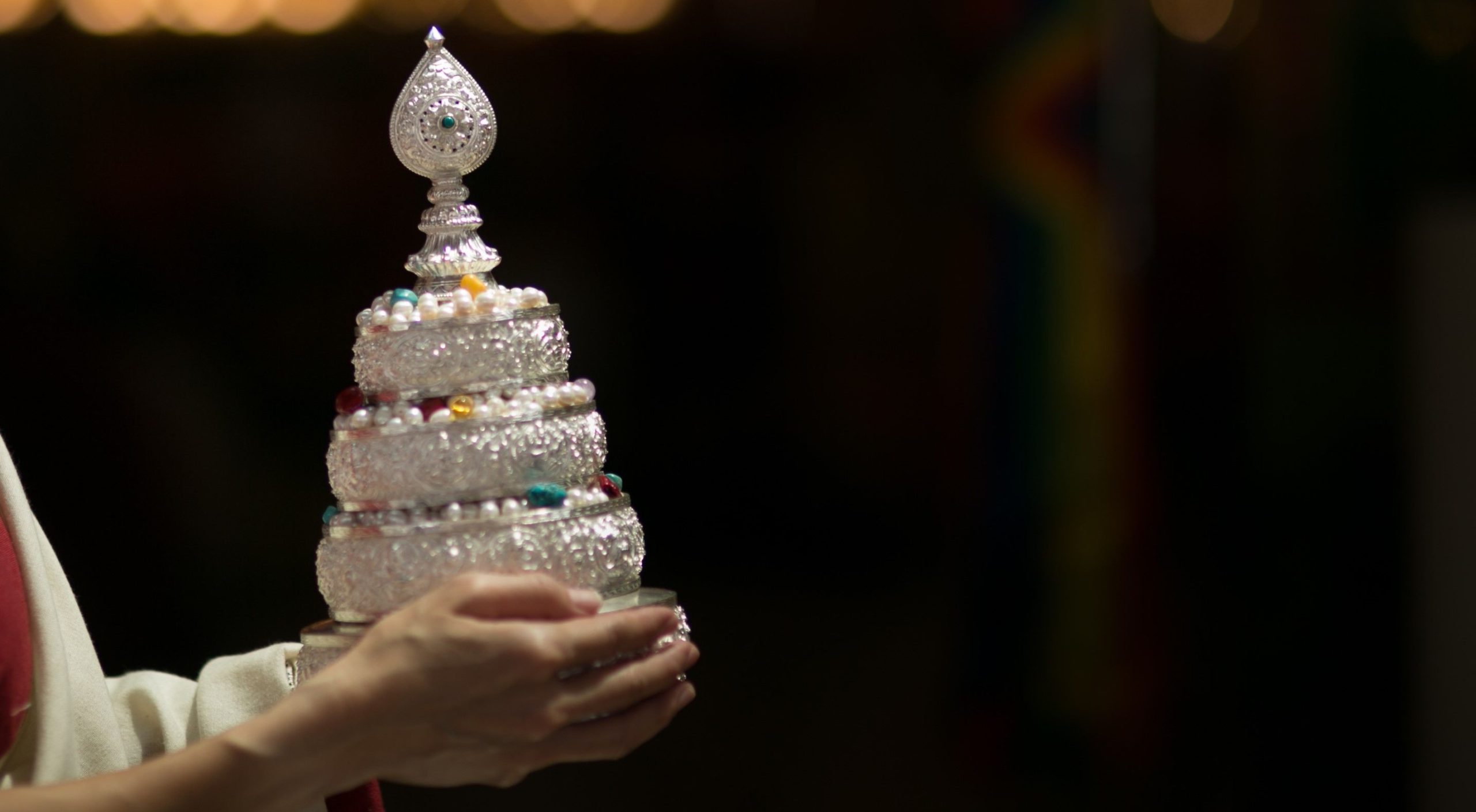
We had just moved to the new temple at 2 Beatty Lane. I had requested Rinpoche for teachings on the day that commemorates Buddha’s first turning of the wheel of Dharma. Rinpoche said this was auspicious and agreed. That evening during the teaching, I sat in the audience as the long-life mandala recitation began. Sangyumla turned to me and said, “Lama said for you to offer the long-life mandala”. I was flustered, my mind became blank. I had never offered the long-life mandala before. I leapt up from my seat and went forward to carry the mandala so as not to cause any delay.
As the long mandala offering recitation was completed, Rinpoche said to me in a quiet tone, “you have not prostrated”. My mind was blank, and I felt panicky and nervous. I began doing the prostrations and this gave me some time to consider what I was doing. What was my intent? Did it make sense to be making this offering on such an auspicious day with a completely blank mind, lacking mindfulness, and awareness? Despite an auspicious start, I wondered…. what is this for?
I feel that Rinpoche asks us this question as a skillful reminder for us to be mindful in our actions, and in making any offering, for us to consider the following which he taught “the emptiness of giver, giving and gift”, and reflect on the importance of the motivation of bodhicitta and not give any gift with feelings of attachment or pride about whatever offering is made. If we recall, there are four factors that complete the karma. That means the dedication of merit from any positive action is extremely important. The offerings are then never just a transactional “gift” …
In all that we do – whether it is making offerings, attending teaching or pujas, cleaning the temple or any activity – this seemingly simple question “what is this for” is profound. Having written this, you might think that I remember my own advice all the time. Sadly, no, for I still find myself having completed making an offering or some activity and asking myself “what was that for?” It takes effort to take this intellectual knowledge, internalise it, practise mindfulness, and apply the teachings in our daily lives. I pray you will be very successful in your practice.
Tenzin
16 Jan 2022
Sacred Mirror
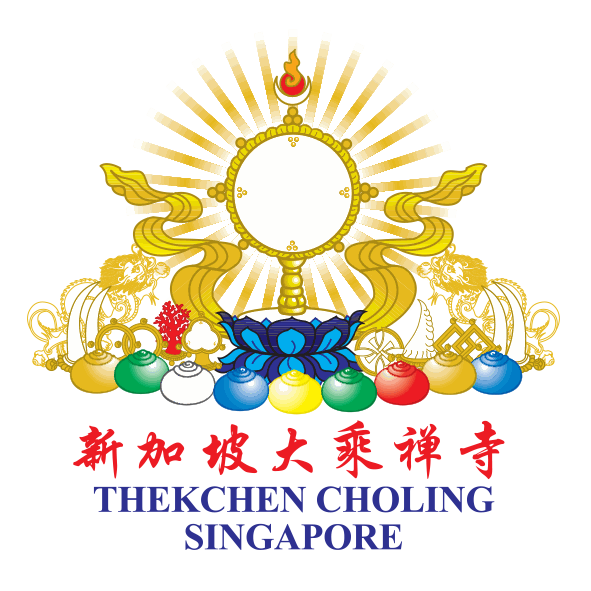
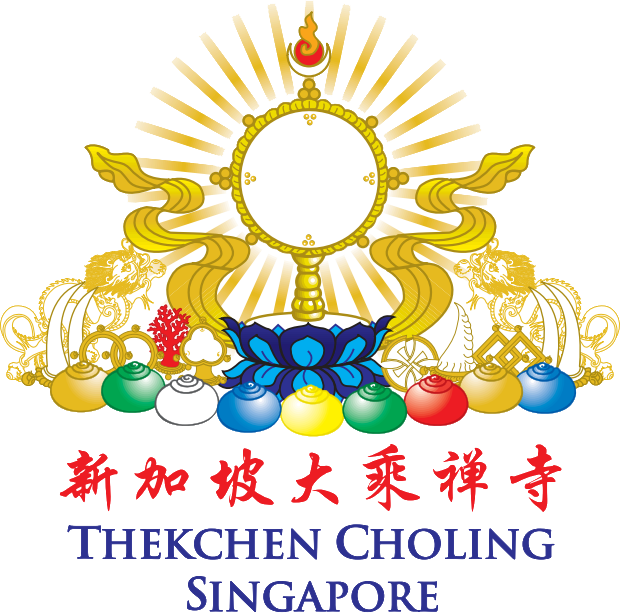
The Sacred Mirror represents consciousness and the element of space. Clear, pure and bright, the mirror reflects all phenomena objectively without bias, thereby reminding us to practice objectivity and to rise above our judgmental minds. On a more subtle level, it reflects the Buddha’s core teaching of emptiness – that nothing exists on its own side without a dependent arising cause.
Pinnacle of the mirror
The pinnacle of the mirror, formed by the white crescent moon, flaming red sun and an orange flame of fire, represents the completion stage of Vajrayana practice.
Light Rays
The light rays radiating from the Sacred Mirror represent the flourishing of the Buddha’s teachings, fanning out to the furthest reaches of the universe.
Full Moon Disc
The moon disc represents Bodhicitta, the aspiration to become a Buddha to benefit all sentient beings.
Blue Lotus
Divinely fragrant, blue lotuses bloomed only in the Buddha’s time. By incorporating it into the temple’s logo, it is symbolic of the ever-present Buddha in Thekchen Choling. Moreover, a lotus flower represents purity, perfection, compassion and renunciation, similar to how the beautiful lotus remains untainted even though it had arisen out from the muddy waters.
Nine Precious Jewels
These nine precious jewels represent the Guru, Buddha, Dharma, Sangha, yidam or mind-seal deity, Dharma protector, the sky, earth, and the human realm.
Two Dragons
The two dragons represent continuity and harmony and create the cause for the temple to enjoy the strong support of members and benefactors for Dharma to flourish.
Golden Khata
The flowing golden khata represents the auspicious increase of all Dharma activities.
The Seven Gems of the Chakravartin or a Wheel-Turning King
1. The precious horse represented by a unicorn’s horn
2. The precious elephant represented by its tusks
3. The precious queen represented by round golden earrings
4. The precious minister represented by square golden earrings
5. The precious general represented by a pair of crossed swords
6. The precious jewel represented by the triple-eyed gem
7. The precious Dharma wheel represented by a branch of coral