
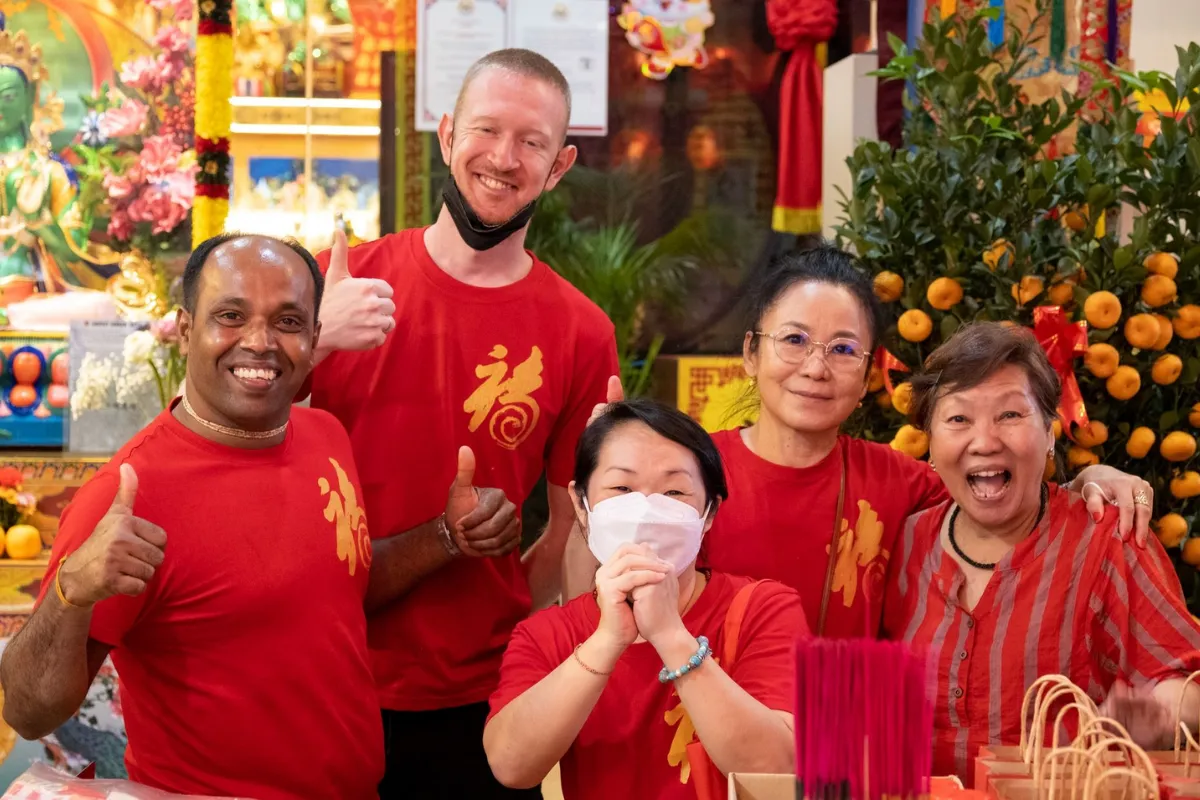
The gentle whispers of compassion find a profound echo in volunteerism – an embodiment of selfless giving and service, weaving seamlessly into the tapestry of what it means to live meaningfully. Volunteerism can be understood as a process of fostering personal growth and weaving threads of kindness through communities. In fact, volunteers find themselves equal recipients in the act of giving and caring.
Compassion isn’t a distant virtue but a relatable call to action, a reminder that kindness isn’t a grand gesture but a series of small, heartfelt acts that alleviate the suffering of those around us.
Consider a volunteer at a community kitchen. Compassion isn’t a theoretical concept, but the warm smile they share as they serve a plate of food. Their actions are guided by a genuine concern for the well-being of others. The engagement goes beyond mere charity to foster a sense of empathy and connection with those being served. Ultimately, the common denominator is that everyone has their struggles, and in this shared human experience, compassion becomes a bridge that connects us all.
Volunteerism is not a heroic quest but a vehicle for personal growth accessible to everyone. It’s not about grandiosity, but about stepping into spaces that challenge us and allow our growth to unfold organically.
A volunteer working with children in underprivileged communities learns patience, discovers the joy in simplicity, and witnesses the resilience of the human spirit. They are equal recipients of the act of kindness—on a transformative journey of self-discovery and self-improvement through the lens of compassion.
Moreover, the act of volunteering is seen as a way to accumulate positive merits. In Buddhist philosophy, karma refers to the law of cause and effect, and positive actions, such as acts of kindness and service, are believed to generate positive outcomes for the individual in this life and the next.
Volunteerism as an act extends its impact beyond the individual to the broader society. As individuals engage in acts of service, communities are strengthened, and societal bonds are forged.
In essence, volunteerism is not a solitary activity, but a shared dance of kindness that creates ripples far beyond the initial act.
Volunteer activities contribute to the well-being of marginalised and underserved populations. This may include providing education, healthcare, and basic necessities to those in need. By addressing societal inequalities and promoting social justice, volunteers actively participate in creating a more compassionate and equitable society.
In the rich tapestry of Buddhist teachings, volunteerism is not an abstract concept. It is a hands-on, relatable practice that echoes in everyday life. It’s about choosing kindness in our interactions and making intentional decisions to better the lives of those around us.
As we navigate the complexities of modern existence, the spirit of volunteerism reminds us that compassion is never reserved only for saints or sages—it’s a gift accessible to all. In the everyday choices we make and the small acts of service, we find the heartbeat of a life larger than us. When embraced, this living practice transforms not only the communities we touch but also our lives.
At Thekchen Choling Singapore, we are connected with different communities and volunteer opportunities. If you would like to explore volunteerism but are unsure where to start, you can either register as a volunteer or drop by our temple at Jalan Besar!
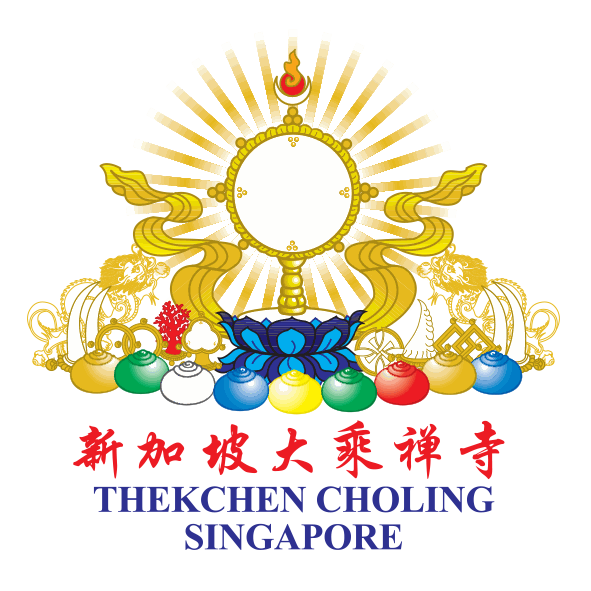
Sacred Mirror
The Sacred Mirror represents consciousness and the element of space. Clear, pure and bright, the mirror reflects all phenomena objectively without bias, thereby reminding us to practice objectivity and to rise above our judgmental minds. On a more subtle level, it reflects the Buddha’s core teaching of emptiness – that nothing exists on its own side without a dependent arising cause.
Pinnacle of the mirror
The pinnacle of the mirror, formed by the white crescent moon, flaming red sun and an orange flame of fire, represents the completion stage of Vajrayana practice.
Light Rays
The light rays radiating from the Sacred Mirror represent the flourishing of the Buddha’s teachings, fanning out to the furthest reaches of the universe.
Full Moon Disc
The moon disc represents Bodhicitta, the aspiration to become a Buddha to benefit all sentient beings.
Blue Lotus
Divinely fragrant, blue lotuses bloomed only in the Buddha’s time. By incorporating it into the temple’s logo, it is symbolic of the ever-present Buddha in Thekchen Choling. Moreover, a lotus flower represents purity, perfection, compassion and renunciation, similar to how the beautiful lotus remains untainted even though it had arisen out from the muddy waters.
Nine Precious Jewels
These nine precious jewels represent the Guru, Buddha, Dharma, Sangha, yidam or mind-seal deity, Dharma protector, the sky, earth, and the human realm.
Two Dragons
The two dragons represent continuity and harmony and create the cause for the temple to enjoy the strong support of members and benefactors for Dharma to flourish.
Golden Khata
The flowing golden khata represents the auspicious increase of all Dharma activities.
The Seven Gems of the Chakravartin or a Wheel-Turning King
1. The precious horse represented by a unicorn’s horn
2. The precious elephant represented by its tusks
3. The precious queen represented by round golden earrings
4. The precious minister represented by square golden earrings
5. The precious general represented by a pair of crossed swords
6. The precious jewel represented by the triple-eyed gem
7. The precious Dharma wheel represented by a branch of coral