
Imparting essential values, morals, and social skills that form the bedrock of a child’s character. The emotional support and guidance parents offer create a secure and nurturing environment, fostering a sense of belonging and self-worth in their children. Important life skills, such as resilience, when developed young can enable children to better handle the challenges of the future.
Instilling a sense of spirituality and mindfulness is paramount to building self-awareness and resilience. While it can feel like an uphill task, the Dharma, rooted in ancient wisdom, offers profound teachings that can serve as a guide for children. As parents, cultivating an environment that introduces practices and beliefs has to involve a delicate blend of intention, creativity, and patience.
Children are keen observers. Often, the most impactful lessons come from actions rather than words. Demonstrating the principles of the Dharma through your own behaviour is a powerful way to introduce them to these teachings. Practice mindfulness in your daily life, exhibit compassion towards others and showcase the importance of ethical decision-making. Your actions lay the foundation for the values you wish to instil in your children.
Mindfulness need not be confined to meditation sessions; it can seamlessly integrate into everyday activities. Encourage children to be present in the moment while eating, playing, or even doing chores. For instance, during meals, ask them to savour each bite mindfully, fostering an awareness of the present moment. This approach helps children grasp the concept of mindfulness as a continuous, accessible practice rather than a separate, formal activity.
Storytelling is a timeless method for conveying complex concepts in a way that captivates young minds. Choose stories that embody Dharma principles, such as compassion, kindness, and the interconnectedness of all living beings. Narratives that involve animals or nature often resonate well with children. Through these stories, they can grasp fundamental concepts in a relatable and engaging manner.
Rituals provide a sense of continuity and structure, reinforcing the importance of principles in daily life. Establish simple, meaningful rituals that resonate with your family. This could include a short morning meditation, expressing gratitude before meals, or a bedtime reflection. Rituals help anchor the teachings of the Dharma in practical, everyday experiences, making them more tangible for children, that over time becomes something they reach out for automatically.
Foster an environment where children feel comfortable expressing their curiosity and asking questions about spiritual concepts. Encourage them to explore their understanding of the Dharma and provide age-appropriate resources for further exploration. This approach not only stimulates intellectual growth but also instils a sense of autonomy and ownership over their personal spiritual journey.
Children often express themselves best through creative outlets. Use art, music, or other creative activities as vehicles to explore Dharma principles. Encourage them to draw or paint scenes from stories, create mindful crafts, or even compose simple songs that reflect the values you aim to instil. The creative process becomes a medium through which they internalise and express their understanding of the Dharma.
Gratitude is a cornerstone of many spiritual traditions. Cultivate a habit of expressing gratitude within the family. This can take the form of a daily gratitude circle, where each family member shares something they are thankful for. By emphasising the positive aspects of life, children learn to appreciate the interconnectedness of joy and gratitude.
The Dharma often emphasises the interconnectedness of all living things. Nature provides a perfect backdrop for teaching this principle. Spend time outdoors as a family—hike in the woods, plant a garden together, or simply enjoy the beauty of a sunset. Hikes, in particular, allow parents and children to get up close and personal with different living creatures and plants, and to have conversations about what they see, smell or touch. Through these experiences, children can develop a deep appreciation for the natural world and understand their place within it.
Teach children the joy of giving by engaging in acts of kindness and service. This could involve participating in community service projects, helping neighbours, or even small acts of kindness within the family. Affirming children whenever they do anything kind and thoughtful helps to strengthen this. By highlighting compassion in action, children not only learn about the importance of selflessness but also experience the positive impact they can have on others.
Introducing children to the Dharma is a journey that requires patience, creativity, and an open heart. It never happens overnight. Through practices integrated into your family life, you provide your children with a foundation of values that can guide them throughout their lives.
Remember that the process is gradual, and the key lies in creating an environment where the principles of the Dharma are not imposed but gently woven into the fabric of daily life. As parents, you play a pivotal role in nurturing the spiritual growth of your children and shaping their perspective on life, relationships, and the world around them.
Raising a child is not easy, and sometimes it requires support. If you’re looking for a community or support on this journey, Thekchen Choling has offerings that can help anchor you more deeply in the practice.
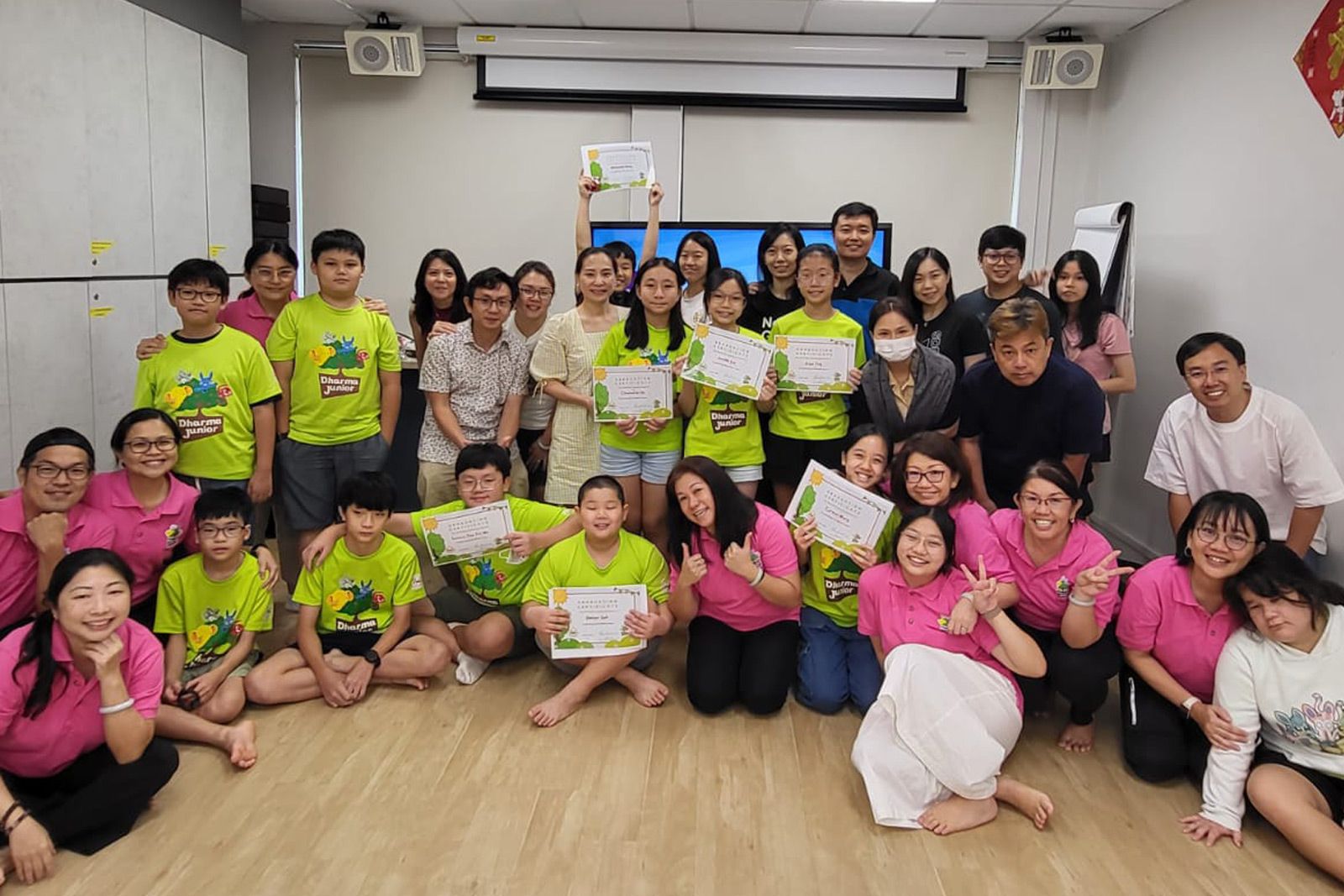
Calling all parents with kids aged 4 to 12! Explore Dharma through engaging and fun activities.
Discover more on our Facebook or website.
Enlist your children in the Dharma Junior course today for an enriching experience!
Click here to register. (Closing Date: 24 Feb 2024)

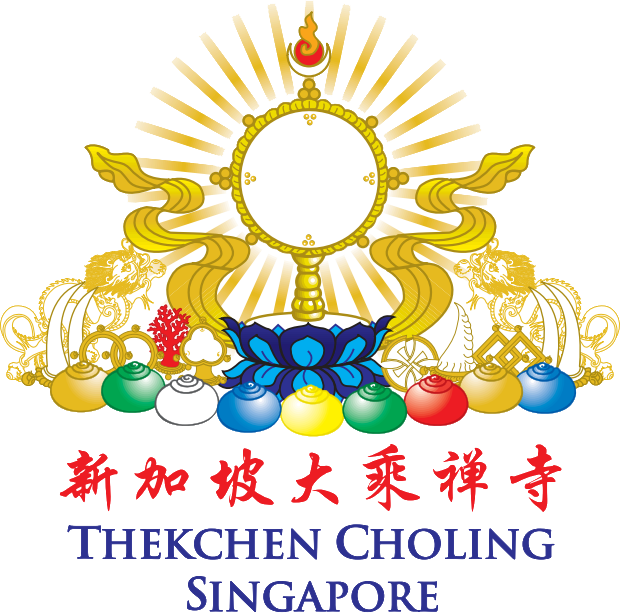
Sacred Mirror
The Sacred Mirror represents consciousness and the element of space. Clear, pure and bright, the mirror reflects all phenomena objectively without bias, thereby reminding us to practice objectivity and to rise above our judgmental minds. On a more subtle level, it reflects the Buddha’s core teaching of emptiness – that nothing exists on its own side without a dependent arising cause.
Pinnacle of the mirror
The pinnacle of the mirror, formed by the white crescent moon, flaming red sun and an orange flame of fire, represents the completion stage of Vajrayana practice.
Light Rays
The light rays radiating from the Sacred Mirror represent the flourishing of the Buddha’s teachings, fanning out to the furthest reaches of the universe.
Full Moon Disc
The moon disc represents Bodhicitta, the aspiration to become a Buddha to benefit all sentient beings.
Blue Lotus
Divinely fragrant, blue lotuses bloomed only in the Buddha’s time. By incorporating it into the temple’s logo, it is symbolic of the ever-present Buddha in Thekchen Choling. Moreover, a lotus flower represents purity, perfection, compassion and renunciation, similar to how the beautiful lotus remains untainted even though it had arisen out from the muddy waters.
Nine Precious Jewels
These nine precious jewels represent the Guru, Buddha, Dharma, Sangha, yidam or mind-seal deity, Dharma protector, the sky, earth, and the human realm.
Two Dragons
The two dragons represent continuity and harmony and create the cause for the temple to enjoy the strong support of members and benefactors for Dharma to flourish.
Golden Khata
The flowing golden khata represents the auspicious increase of all Dharma activities.
The Seven Gems of the Chakravartin or a Wheel-Turning King
1. The precious horse represented by a unicorn’s horn
2. The precious elephant represented by its tusks
3. The precious queen represented by round golden earrings
4. The precious minister represented by square golden earrings
5. The precious general represented by a pair of crossed swords
6. The precious jewel represented by the triple-eyed gem
7. The precious Dharma wheel represented by a branch of coral