
Learn how to achieve harmony amidst family, work and other commitments.
Share your experiences with your spouse and your family members. Care, communicate and work together for the good of your family and for the common good of everyone. Discuss your experiences with your family members. Don’t shut them out. It is a big mistake to allow Dharma to cause a separation between you. Dharma is the seed which you plant to create the conditions for you to follow your path. If your family does not share in your views, it’s okay. Be patient and realize that we should not always be living in an instant world. Having patience helps to create balance.
We all need hope. We all want happiness. We all are searching for the light at the end of the tunnel. We all have our struggles and we all have our past. We all have our family problems and we all have our deep, dark secrets. And, we are all NOT angels!
Good relationships all require support and understanding. When somebody falters, remember to support them rather than to police them. Ordinary beings really need to hear and to feel “I love you” every day. Be willing to experience what you learn and be willing to share your experiences. We will each fall sometimes due to our lack of wisdom and our lack of experience but in time we will learn to improve by recognizing this and realigning ourselves.
It is upon these common grounds that we can all come together to share our lives. It is in sharing our lives and experiences that it all becomes so special and so meaningful!
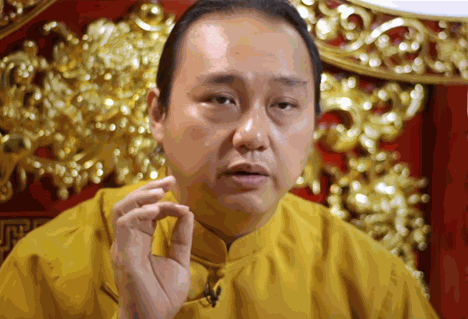
This advice along with what the Guru not wanting disciples to be fans, was shared by Singha Rinpoche on the 21st October 2015, in Syracuse New York while teaching on Making A Committment to a Daily Practice
Dharma Wisdom
Sacred Mirror
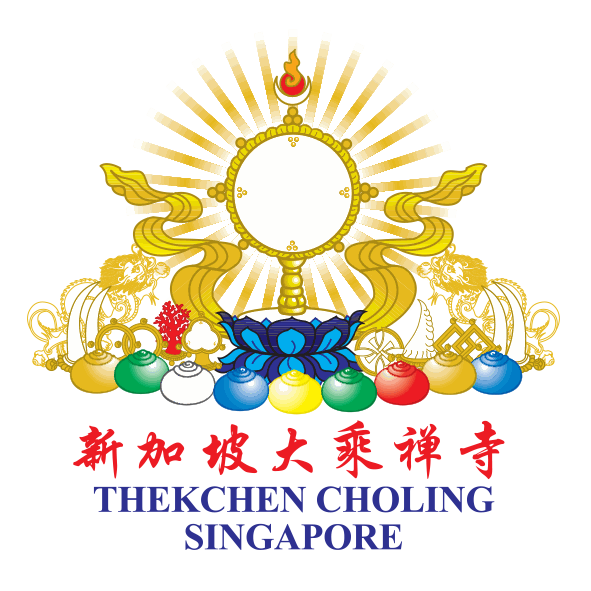
The Sacred Mirror represents consciousness and the element of space. Clear, pure and bright, the mirror reflects all phenomena objectively without bias, thereby reminding us to practice objectivity and to rise above our judgmental minds. On a more subtle level, it reflects the Buddha’s core teaching of emptiness – that nothing exists on its own side without a dependent arising cause.
Pinnacle of the mirror
The pinnacle of the mirror, formed by the white crescent moon, flaming red sun and an orange flame of fire, represents the completion stage of Vajrayana practice.
Light Rays
The light rays radiating from the Sacred Mirror represent the flourishing of the Buddha’s teachings, fanning out to the furthest reaches of the universe.
Full Moon Disc
The moon disc represents Bodhicitta, the aspiration to become a Buddha to benefit all sentient beings.
Blue Lotus
Divinely fragrant, blue lotuses bloomed only in the Buddha’s time. By incorporating it into the temple’s logo, it is symbolic of the ever-present Buddha in Thekchen Choling. Moreover, a lotus flower represents purity, perfection, compassion and renunciation, similar to how the beautiful lotus remains untainted even though it had arisen out from the muddy waters.
Nine Precious Jewels
These nine precious jewels represent the Guru, Buddha, Dharma, Sangha, yidam or mind-seal deity, Dharma protector, the sky, earth, and the human realm.
Two Dragons
The two dragons represent continuity and harmony and create the cause for the temple to enjoy the strong support of members and benefactors for Dharma to flourish.
Golden Khata
The flowing golden khata represents the auspicious increase of all Dharma activities.
The Seven Gems of the Chakravartin or a Wheel-Turning King
1. The precious horse represented by a unicorn’s horn
2. The precious elephant represented by its tusks
3. The precious queen represented by round golden earrings
4. The precious minister represented by square golden earrings
5. The precious general represented by a pair of crossed swords
6. The precious jewel represented by the triple-eyed gem
7. The precious Dharma wheel represented by a branch of coral